
I just read Anne Drapkin Lyerly's "Shame, Gender, Birth" (Hypatia 21:3 (2006): 101-18), and it is the best piece on feminist childbirth I have ever read. I definitely think that feminists need to take on issues of childbirth and that frequently the medicalization of pregnancy and childbirth has caused anxiety, physical and emotional pain, and even trauma in some women. But I am not comfortable with most of the articles I've read proposing solutions to these problems because they all seem to want to reject technology and take birth totally out of the hospital. That's fine for some women, but not for everyone. I feel a sense of security in a hospital setting, and I would feel frightened and anxious giving birth in any other place. So clearly it is not a good solution for me. As Lyerly points out, the emotional life of each women needs to be taken into account to help make her birth experience positive. And she says that technology is not all bad--finally! The real key is the sensitive use of technology--sensitive to the desires and emotions of the birthing woman. And that all comes down to the support around her.
I had a highly medicated birth--pitocin to induce contractions because my water was leaking, then Stadol for the pain (I actually didn't like that and will choose not to use it again), and then (hooray!) the epidural. And episiotomy. Lots of medical intervention. And it was actually a pretty great experience because the people around me were sensitive to my needs and desires and cared for me in the way that I personally needed. My nurse was fantastic--very nurturing and reassuring. They allowed my parents to come into the labor room so that in the long waiting period, I was relaxed and happy with my family around me. Then I could choose who got to stay and who had to leave when I started pushing. I am also very appreciative of my anesthesiologist--she gave me an epidural that ensured that I felt no pain but that I did feel all of the contractions and even the baby moving down and out. At all times I felt like I had control of the situation and that my caregivers respected me. And because the epidural was applied with what I consider a great deal of sensitivity, I never felt a distance from the experience of birth that might come with total numbness. I always knew what was going on. I strongly believe that this is the key to a positive birth experience--not more or less technology, not in or out of hospital, but caregivers who earnestly listen to the birthing woman and try to provide the care that makes her comfortable, secure, and happy.
Thursday, October 12, 2006


Monday, October 09, 2006
A link for you
This is a couple of weeks old, but very good. Everyone should read it:
Leslie Madsen Brooks, "Disciplining the Breast, Disciplining the Woman: A Meditation in Six Parts"
Leslie Madsen Brooks, "Disciplining the Breast, Disciplining the Woman: A Meditation in Six Parts"
Friday, October 06, 2006
I don't want to do Halloween
I'm so unmotivated in general right now, and that extends to Halloween. I'd really like it to just pass by unnoticed, and RB is young enough that I could get away with that. But my husband was appalled by that suggestion, so I guess we're doing Halloween. So now I need a low-effort, low-cost costume for a small person.
How about a T-shirt that says, "I'm a feminist. We look like everybody else."
How about a T-shirt that says, "I'm a feminist. We look like everybody else."
blogs in composition class
After pondering blogs vs. message boards, I have begun to think of things differently. Originally I was thinking of which medium would be better for student responses and engaging with other students, but I'm thinking that a blogs aren't really that useful for that purpose. When students are required to read and respond to a other students' posts, the responses are typically superficial and don't accomplish what I wish they would.
So what do I want out of a blog? Here are a couple of old posts on audience and blogging that I wrote when I first started this blog. I was excited about my developing sense of audience and how that shaped what my blog became. I want my students to experience that, and I also think that frequent "low stakes" writing is really useful to me and to my students to help us feel like writing is a habit and even fun and not a scary, anxiety-inducing reach for perfection that we cannot achieve--I think that most students feel this anxiety to some degree, and for many it is paralyzing. This is the value I see in a blog--a vehicle by which to work out ideas through writing (or as the dreaded freshman comp books call it, "prewriting"), to write habitually, to gain a new understanding of audience. And that end cannot be reached through forced interaction.
I had a great talk recently with a fellow teacher who is using blogs in a way that I think is really useful. She is teaching an Advanced Composition class and giving blog assignments that are not direct responses to readings but rather related questions that can be taken out of the context of this class and might be of interest to a blog reader who is not in the class. An example of one of her questions is, "What are you doing here?" Here, meaning online, on the web, in the electronic world of communication. So students can answer this question is many different ways and readers can stumble onto the blogs and read interesting posts that are not limited to a specific reading or specific course. The students have an opportunity, while meeting certain criteria, to create blogs that are interesting to them and might interest others--in other words, real blogs and that do more than just go through the motions. She has also asked them to link to other blogs in a couple of posts, which has started getting them some response because, as we know, any diligent blogger knows about every link.
And students are not required to read or respond to the blogs of other students. Which leaves a place for message boards, although I'm not convinced they work so well. We'll get to that in another installment.
While this will not work for all classes in all subjects, I think this is a great way to use blogs in a composition class, and I'm going to do this next semester.
So what do I want out of a blog? Here are a couple of old posts on audience and blogging that I wrote when I first started this blog. I was excited about my developing sense of audience and how that shaped what my blog became. I want my students to experience that, and I also think that frequent "low stakes" writing is really useful to me and to my students to help us feel like writing is a habit and even fun and not a scary, anxiety-inducing reach for perfection that we cannot achieve--I think that most students feel this anxiety to some degree, and for many it is paralyzing. This is the value I see in a blog--a vehicle by which to work out ideas through writing (or as the dreaded freshman comp books call it, "prewriting"), to write habitually, to gain a new understanding of audience. And that end cannot be reached through forced interaction.
I had a great talk recently with a fellow teacher who is using blogs in a way that I think is really useful. She is teaching an Advanced Composition class and giving blog assignments that are not direct responses to readings but rather related questions that can be taken out of the context of this class and might be of interest to a blog reader who is not in the class. An example of one of her questions is, "What are you doing here?" Here, meaning online, on the web, in the electronic world of communication. So students can answer this question is many different ways and readers can stumble onto the blogs and read interesting posts that are not limited to a specific reading or specific course. The students have an opportunity, while meeting certain criteria, to create blogs that are interesting to them and might interest others--in other words, real blogs and that do more than just go through the motions. She has also asked them to link to other blogs in a couple of posts, which has started getting them some response because, as we know, any diligent blogger knows about every link.
And students are not required to read or respond to the blogs of other students. Which leaves a place for message boards, although I'm not convinced they work so well. We'll get to that in another installment.
While this will not work for all classes in all subjects, I think this is a great way to use blogs in a composition class, and I'm going to do this next semester.
I feel wretched
Okay, so I did ask for some morning sickness early on to ease my fears. I got plenty. And now I should be done. And I'm still vomiting. Not fun.
I have a pile of work to do right now, and it is so hard to get work done when I feel so so bad. This is the hard part about being pregnant in graduate school--that first few months when you're so sick and so sleepy and people want you to read books and write papers and teach people things.
I have slacked off a bit in the beginning of the semester, just getting by, really, which means that I now have to be seriously on top of things for the next two months. I have a conference at the end of the month--long paper must be converted to short paper--and I have an essay due December 1 for a collection--and I keep having fears that my paper is going to be booted out in the end. I don't know why I think that--maybe because I haven't written a paper yet! And I am writing a paper for my politics of motherhood class, which should contribute significantly to my dissertation, so I'm just going to count that paper as working on my dissertation, thank you very much. And I'm applying for a fellowship, so that's a lot of work, too. My plate is full.
I have a pile of work to do right now, and it is so hard to get work done when I feel so so bad. This is the hard part about being pregnant in graduate school--that first few months when you're so sick and so sleepy and people want you to read books and write papers and teach people things.
I have slacked off a bit in the beginning of the semester, just getting by, really, which means that I now have to be seriously on top of things for the next two months. I have a conference at the end of the month--long paper must be converted to short paper--and I have an essay due December 1 for a collection--and I keep having fears that my paper is going to be booted out in the end. I don't know why I think that--maybe because I haven't written a paper yet! And I am writing a paper for my politics of motherhood class, which should contribute significantly to my dissertation, so I'm just going to count that paper as working on my dissertation, thank you very much. And I'm applying for a fellowship, so that's a lot of work, too. My plate is full.
Wednesday, October 04, 2006
thoughts on the blog and a note to readers
I've been thinking a lot about blogging and its personal, professional, and pedagogical potential. This blog has a tendency toward the personal (obviously) but is not exactly a confessional (though, of course, it gets that way, too). I conceive of it as having a particular subject matter (widely defined) and do not stray much from it. I write about teaching, academic work, academic culture, and parenting. So there's a lot in my life that's not up here ever.
Lately a few people I know IRL have "confessed" that they read my blog. I just want to say that if you know me and read this, it's okay, I don't think it's wierd, I don't think it's prying. After all, I publish this stuff. And, really, it makes me happy when someone says they read my blog. And even happier when I get comments. I don't think of this as a personal journal. I think of it as communicating. So I want readers. Readers make me happy :)
My husband watched me commenting on other blogs recently and said "You're such a blogger." I'm not sure what connotations were attached to that, but it made me smile.
Lately a few people I know IRL have "confessed" that they read my blog. I just want to say that if you know me and read this, it's okay, I don't think it's wierd, I don't think it's prying. After all, I publish this stuff. And, really, it makes me happy when someone says they read my blog. And even happier when I get comments. I don't think of this as a personal journal. I think of it as communicating. So I want readers. Readers make me happy :)
My husband watched me commenting on other blogs recently and said "You're such a blogger." I'm not sure what connotations were attached to that, but it made me smile.
Googlers
I just checked the tracker and found a plethora of interesting Google searches that led to me. Here are my favorites:
o'connor "violent bear" satan
I am not smart enough to get a ph d
being a pregnant PhD student
happy and joyful reaction to pregnancy
no one wants to talk about miscarriage
funny female characters
The Little Mermaid - Female Competition
hobbies to do when bored or hungry
I need to check that thing more often. Those were just from the past two days!
o'connor "violent bear" satan
I am not smart enough to get a ph d
being a pregnant PhD student
happy and joyful reaction to pregnancy
no one wants to talk about miscarriage
funny female characters
The Little Mermaid - Female Competition
hobbies to do when bored or hungry
I need to check that thing more often. Those were just from the past two days!
what I like about Turnitin.com
I'm not going to weigh in on the controversy over intellectual property. But I will say that I have used Turnitin for several semesters and I like it, and not really for plagiarism detection. Here's how I use it.
Plagiarism deterrent: I think that Turnitin works better as a plagiarism deterrent than a detector. There are a lot of ways to cheat and most of them cannot be detected by Turnitin. (But I'm not going to tell you what they are, you mischievous Googler. You'll have to figure out how to cheat for yourself!) But I do think that students are deterred from participating in the very easy cut-and-paste kind of cheating that Turnitin can detect because they are pretty sure that they'll get caught. So that's not bad.
Teaching proper attribution: I think that a lot of the problems with student writing is not that they want to cheat but that they don't know how to use sources properly, especially electronic sources that can be cut and pasted so easily. I think that some students really don't get that it's cheating. (I know, that's a lot of benefit of the doubt there, but I tend to extend that benefit until I see evidence that it is undeserved. I like to think that people are trying to do good.) So allowing student to see their reports on Turnitin points them to poor paraphrasing and insufficient attribution, so they can then revise and resubmit. Great teaching moment. (Of course, some argue that it actually teaches them how to be better cheaters.)
Gradebook: It has a nice gradebook function that allows students to check their grades on their own and keeps a running tally so I don't have to do complicated math that I don't understand. Honestly, I don't know what grade a student is getting half-way through the semester. I can just do the formulas at the end. Plus, it annoys me when they ask. It also keeps attendence. But if you're using it, you should download a backup frequently.
Peer Review: The peer review function is pretty good. It can be anonymous or not, and the instructor has the option of choosing from a library of questions or of writing her own questions. You can set a word count requirement for responses. You can require a combination of short and long responses and numerical ratings. Lots of options. And students can leave marks one the paper to point out specific areas for comment or correction. Good stuff, overall.
Grademarking: Nice. I expected not to like it, but in the end was quite pleased. I wrote about it here.
Electronic paper submission: One simple aspect of it is the easy and secure method of electronic paper submission. Email can be so iffy. Inbox is flooded with trash, messages can get deleted or bounced, or you can just miss one altogether because students have not mastered the skill of the subject heading. This is a nice, central place to collect papers, and you can easily download them ALL in one step onto your hard drive for a backup instead of one paper at a time in email.
I've been thinking about all the different technologies I've used and am using now in class, and I'm going to write a series of posts about how I've used them in the past and how they might be useful in the future.
Plagiarism deterrent: I think that Turnitin works better as a plagiarism deterrent than a detector. There are a lot of ways to cheat and most of them cannot be detected by Turnitin. (But I'm not going to tell you what they are, you mischievous Googler. You'll have to figure out how to cheat for yourself!) But I do think that students are deterred from participating in the very easy cut-and-paste kind of cheating that Turnitin can detect because they are pretty sure that they'll get caught. So that's not bad.
Teaching proper attribution: I think that a lot of the problems with student writing is not that they want to cheat but that they don't know how to use sources properly, especially electronic sources that can be cut and pasted so easily. I think that some students really don't get that it's cheating. (I know, that's a lot of benefit of the doubt there, but I tend to extend that benefit until I see evidence that it is undeserved. I like to think that people are trying to do good.) So allowing student to see their reports on Turnitin points them to poor paraphrasing and insufficient attribution, so they can then revise and resubmit. Great teaching moment. (Of course, some argue that it actually teaches them how to be better cheaters.)
Gradebook: It has a nice gradebook function that allows students to check their grades on their own and keeps a running tally so I don't have to do complicated math that I don't understand. Honestly, I don't know what grade a student is getting half-way through the semester. I can just do the formulas at the end. Plus, it annoys me when they ask. It also keeps attendence. But if you're using it, you should download a backup frequently.
Peer Review: The peer review function is pretty good. It can be anonymous or not, and the instructor has the option of choosing from a library of questions or of writing her own questions. You can set a word count requirement for responses. You can require a combination of short and long responses and numerical ratings. Lots of options. And students can leave marks one the paper to point out specific areas for comment or correction. Good stuff, overall.
Grademarking: Nice. I expected not to like it, but in the end was quite pleased. I wrote about it here.
Electronic paper submission: One simple aspect of it is the easy and secure method of electronic paper submission. Email can be so iffy. Inbox is flooded with trash, messages can get deleted or bounced, or you can just miss one altogether because students have not mastered the skill of the subject heading. This is a nice, central place to collect papers, and you can easily download them ALL in one step onto your hard drive for a backup instead of one paper at a time in email.
I've been thinking about all the different technologies I've used and am using now in class, and I'm going to write a series of posts about how I've used them in the past and how they might be useful in the future.
Monday, October 02, 2006
Friday, September 29, 2006
a post with a much less important point
I have a new pet peeve. Where did the word "yay" come from? I thought it was spelled "yea," but I appear to be the only one spelling it that way anymore. Now everyone spells "yay." Maybe to prevent confusing it with the word "yeah"? I suppose I should go with the flow and start using "yay." But I just want to go on record as making this move reluctantly.
the g-word
A few months ago, I started to realize that my daughter is verbally advanced far beyond many children her age. She has a large vocabulary, constructs complex sentence structures, and articulates emotions. I was a bit startled when all of this came together right before her second birthday, partly because I had not really been comparing her to other children her age until then. And I was frustrated because talking about it with other people was difficult.
Of course, I am pleased to see her doing so well, but I was also worried because I wasn't sure what my responsibility should be at that point. How do I respond to this? Does this mean she is gifted? If so, how do I nurture that? When I posted on the blog about it, I used the word gifted. Little did I know how loaded that word is!
I began a web search and started browsing some books on advanced toddlers, and what I found made me very uncomfortable. So much of the information I got began with talk of testing children to see if they are really gifted or just very bright. I am sure that there is a purpose to this distinction and a purpose to academic testing of toddlers, but I can't see what it is. Even the suggestion of it shocked me. I found tons of teaching materials for very young children and information about schools with special curricula, but it all smacked of pressure and pushing and competition, which I think has no place in the life of a two-year-old.
I have worked with RB at home on some academic skills--learning ABCs, numbers, shapes, colors, etc. But in her first two years, I did not rely on books or websites to tell me what to teach her. I watched her. Early on I tried to talk to her about colors, and she clearly had no interest, so I assumed she was too young and dropped it. Later I brought it up again and she was enthusiastic about it, so I thought she must be ready. That's how everything went. If she paid attention to it and enjoyed it, we did it. If not, I just took for granted that it was too soon and left it alone. And it has all been in the context of fun and games and play. RB goes to preschool with a curriculum and lesson plans and all that, but the way it actually happens is more like play time with a theme. One week, it's family members. One week it's food. One week it's the color red. This kind of play-learning, I believe (and I am not an expert on child development, of course), is the only kind appropriate for young children, and it also allows children of many developmental stages to be in the same class, doing activities together, learning at the individual pace of each child.
So the big question I had over the summer was do I teach her to read? I have decided that, no, I will not impose a strutured approach to teaching reading before she goes to kindergarten (but I am not criticizing those who do--this is a very personal choice). She is interested in reading and she loves books, and I am just going to keep reading to her, reading my own books in front of her, singing songs and playing games, and she will show me what she wants to learn. A good friend of mine has a son who is four and reads quite well without a formal curriculum of phonics exercises. He just picked it up by playing games and reading with his mom. Maybe RB will do that. Maybe she will learn to read in kindergarten. And that's totally okay! I learned to read in kindergarten, and I was six years old when I started. And I'm getting a Ph.D. in literature. Clearly, my reading life has gone well.
I think that too many people look at childhood as a race to be the first and the best, and that puts stress and pressure on parents and children alike. It also creates barriers to parents sharing the joyful (and painful) experiences of raising children because of the anxiety of competition among them. I have decided not to worry about that anymore. I will tell my cute kid stories, I will even brag sometimes, and I will happily listen to other parents brag about all of their cute kid stories. And I will not use the word "gifted" anymore. It leaves a bad taste in my mouth.
Of course, I am pleased to see her doing so well, but I was also worried because I wasn't sure what my responsibility should be at that point. How do I respond to this? Does this mean she is gifted? If so, how do I nurture that? When I posted on the blog about it, I used the word gifted. Little did I know how loaded that word is!
I began a web search and started browsing some books on advanced toddlers, and what I found made me very uncomfortable. So much of the information I got began with talk of testing children to see if they are really gifted or just very bright. I am sure that there is a purpose to this distinction and a purpose to academic testing of toddlers, but I can't see what it is. Even the suggestion of it shocked me. I found tons of teaching materials for very young children and information about schools with special curricula, but it all smacked of pressure and pushing and competition, which I think has no place in the life of a two-year-old.
I have worked with RB at home on some academic skills--learning ABCs, numbers, shapes, colors, etc. But in her first two years, I did not rely on books or websites to tell me what to teach her. I watched her. Early on I tried to talk to her about colors, and she clearly had no interest, so I assumed she was too young and dropped it. Later I brought it up again and she was enthusiastic about it, so I thought she must be ready. That's how everything went. If she paid attention to it and enjoyed it, we did it. If not, I just took for granted that it was too soon and left it alone. And it has all been in the context of fun and games and play. RB goes to preschool with a curriculum and lesson plans and all that, but the way it actually happens is more like play time with a theme. One week, it's family members. One week it's food. One week it's the color red. This kind of play-learning, I believe (and I am not an expert on child development, of course), is the only kind appropriate for young children, and it also allows children of many developmental stages to be in the same class, doing activities together, learning at the individual pace of each child.
So the big question I had over the summer was do I teach her to read? I have decided that, no, I will not impose a strutured approach to teaching reading before she goes to kindergarten (but I am not criticizing those who do--this is a very personal choice). She is interested in reading and she loves books, and I am just going to keep reading to her, reading my own books in front of her, singing songs and playing games, and she will show me what she wants to learn. A good friend of mine has a son who is four and reads quite well without a formal curriculum of phonics exercises. He just picked it up by playing games and reading with his mom. Maybe RB will do that. Maybe she will learn to read in kindergarten. And that's totally okay! I learned to read in kindergarten, and I was six years old when I started. And I'm getting a Ph.D. in literature. Clearly, my reading life has gone well.
I think that too many people look at childhood as a race to be the first and the best, and that puts stress and pressure on parents and children alike. It also creates barriers to parents sharing the joyful (and painful) experiences of raising children because of the anxiety of competition among them. I have decided not to worry about that anymore. I will tell my cute kid stories, I will even brag sometimes, and I will happily listen to other parents brag about all of their cute kid stories. And I will not use the word "gifted" anymore. It leaves a bad taste in my mouth.
Wednesday, September 27, 2006
the craziest mixed metaphor I have ever read
I'm reading Elizabeth M. Armstrong's Concieving Risk, Bearing Responsibility, and I just read the craziest mixed metaphor ever. Armstrong quotes extensively from interviews with physicians, and one describes the way that pregnancy "used to be" thought of, in contrast to a focus on risk avoidance now:
"I think pregnancy used to be considered, you know, like a parasitic growth. I don't mean that people really thought of it that way, but their perception was, 'This is something on autopilot. And I am just holding onto it and then I am going to return it to the library.'"
So is the fetus a parasite or an airplane or a library book? Spectacular.
"I think pregnancy used to be considered, you know, like a parasitic growth. I don't mean that people really thought of it that way, but their perception was, 'This is something on autopilot. And I am just holding onto it and then I am going to return it to the library.'"
So is the fetus a parasite or an airplane or a library book? Spectacular.
Update on how I feel about pregnancy
Before I was pregnant--or maybe when I was already pregnant and didn't know it--hard to tell--I posted that I had lost the sense of confidence that I wanted to feel with a second pregnancy. Yesterday, chatting with a woman who is pregnant for the first time, I found myself describing precisely that feeling--I am not afraid in the same way that I was during my first pregnancy. I am not gaining all knowledge from books (really dreadful, frightening books!) but rather relying on my experience and faith. I am not obsessive. I am happier and less tense than I was during my first pregnancy.
A few months ago I predicted that this feeling would not come because my miscarriage had scared me back to the obsessive first-pregnancy craziness. I was also disturbed by my own attitude toward this pregnancy--considering it a pregnancy, a medical condition, not a baby. I didn't like feeling that way. I didn't like my almost indifferent reaction to the positive pregnancy test. That feeling, I think, was a result of being pregnant again so quickly after a miscarriage. And it has passed.
I am now really quite happy about my baby and I look frequently at my ultrasound pictures, which are posted on the fridge and not hidden in a drawer. And I am not obsessive or afraid. Everything is pretty good. But I don't think that means that I have "gotten over" the miscarriage--that I am no longer affected by it.
In the post linked above, I stated that I will always be aware that I have had more pregnancies than children. This is not my second pregnancy, but my third. But I think that the understanding I gained through the experience of loss has freed me to relax and take things as they come right now. It is all about that sense of control that I felt so strongly and lost so suddenly when I lost the baby. There was nothing I did and nothing I could do to change it. So I don't have the sense now that I can control what is happening in my body or to my baby. I can make healthy and responsible choices, of course, but I do not have to drive myself crazy over every minute detail of my life. Because it really doesn't matter. It's not in my hands. And, finally, I'm okay with that.
(Well, look at me being all stable and healthy--so uncharacteristic.)
A few months ago I predicted that this feeling would not come because my miscarriage had scared me back to the obsessive first-pregnancy craziness. I was also disturbed by my own attitude toward this pregnancy--considering it a pregnancy, a medical condition, not a baby. I didn't like feeling that way. I didn't like my almost indifferent reaction to the positive pregnancy test. That feeling, I think, was a result of being pregnant again so quickly after a miscarriage. And it has passed.
I am now really quite happy about my baby and I look frequently at my ultrasound pictures, which are posted on the fridge and not hidden in a drawer. And I am not obsessive or afraid. Everything is pretty good. But I don't think that means that I have "gotten over" the miscarriage--that I am no longer affected by it.
In the post linked above, I stated that I will always be aware that I have had more pregnancies than children. This is not my second pregnancy, but my third. But I think that the understanding I gained through the experience of loss has freed me to relax and take things as they come right now. It is all about that sense of control that I felt so strongly and lost so suddenly when I lost the baby. There was nothing I did and nothing I could do to change it. So I don't have the sense now that I can control what is happening in my body or to my baby. I can make healthy and responsible choices, of course, but I do not have to drive myself crazy over every minute detail of my life. Because it really doesn't matter. It's not in my hands. And, finally, I'm okay with that.
(Well, look at me being all stable and healthy--so uncharacteristic.)
Monday, September 25, 2006
online class getting better
Haven't blogged in a week--and I do have so much to say! But I had a sick little girl and then houseguests and today didn't go as planned, either, so blog is on the back burner.
But I have time for a quick update on my online technical writing class. I feel like I put so much time and energy into the first few weeks and got a ton of frustration in return, but now I am seeing the pay-off of the extra time spent in the beginning. My students seem to be on track at a rate actually better than my traditional classroom--first major assignment, all but one had it in on time. They are generally on top of things and talking to each other and talking to me, and I'm starting to feel pretty good about it all. I think all of us just needed soem time to ease into this new experience.
I think that my spring class is going to be a hybrid traditional classroom and online. Ideally, a computer lab classroom and online, meeting in person maybe once a week, at least in the beginning of the semester. I like the sound of that, and now someone is working with me to design the syllabus, and we'll run similar classes. This semester I have been working in a small group of first-time instructors, and that has been a great support network. I like the idea of having another person trying out this new class with me in the spring, too. The course, BTW, is Advanced Composition with the theme "Identity and Community." More to come on that.
But I have time for a quick update on my online technical writing class. I feel like I put so much time and energy into the first few weeks and got a ton of frustration in return, but now I am seeing the pay-off of the extra time spent in the beginning. My students seem to be on track at a rate actually better than my traditional classroom--first major assignment, all but one had it in on time. They are generally on top of things and talking to each other and talking to me, and I'm starting to feel pretty good about it all. I think all of us just needed soem time to ease into this new experience.
I think that my spring class is going to be a hybrid traditional classroom and online. Ideally, a computer lab classroom and online, meeting in person maybe once a week, at least in the beginning of the semester. I like the sound of that, and now someone is working with me to design the syllabus, and we'll run similar classes. This semester I have been working in a small group of first-time instructors, and that has been a great support network. I like the idea of having another person trying out this new class with me in the spring, too. The course, BTW, is Advanced Composition with the theme "Identity and Community." More to come on that.
Monday, September 18, 2006
blogs or message boards?
If the goal is to get students writing thoughtful responses to course materials and questions and for them to regularly read and comment on other students' posts so that they are engaging each other, is the best tool blogs or message boards?
Blogs might encourage longer posts--not that longer=better but a message board might seem like a place for a quick thought rather than a more developed response. But blogs stand separately, so the discussion might stay on one student's blog and not cross over as much as it would on a message board, where the various threads are all in one place for students to see all at once and click through easily.
It also seems overwhelming to require all students in a class to read all of their classmates' blogs, probably reducing the number of comments each blog would get. This semester, my students are only required to read the blogs of their group members, and the blogs are tied directly to a collaborative project. A message board might facilitate easier exchange among a larger number of class members.
Several years ago as a student I was in a large section of a course (maybe 75 students) with a message board, and it was fairly easy to keep up with the discussion, even with that many course members. But I'm sure that many students sort of fell by the wayside. It also meant that fewer people actually initiated discussions, but more people responded to the posts of other students. Depending on the goal of the exercise, it might be okay if only a handful of students are the initiators as long as the rest are thoughtfully discussing the ideas.
I am considering this question broadly for use with various kinds of classes but also with an online section of Advanced Composition in mind.
Hmmm.
Blogs might encourage longer posts--not that longer=better but a message board might seem like a place for a quick thought rather than a more developed response. But blogs stand separately, so the discussion might stay on one student's blog and not cross over as much as it would on a message board, where the various threads are all in one place for students to see all at once and click through easily.
It also seems overwhelming to require all students in a class to read all of their classmates' blogs, probably reducing the number of comments each blog would get. This semester, my students are only required to read the blogs of their group members, and the blogs are tied directly to a collaborative project. A message board might facilitate easier exchange among a larger number of class members.
Several years ago as a student I was in a large section of a course (maybe 75 students) with a message board, and it was fairly easy to keep up with the discussion, even with that many course members. But I'm sure that many students sort of fell by the wayside. It also meant that fewer people actually initiated discussions, but more people responded to the posts of other students. Depending on the goal of the exercise, it might be okay if only a handful of students are the initiators as long as the rest are thoughtfully discussing the ideas.
I am considering this question broadly for use with various kinds of classes but also with an online section of Advanced Composition in mind.
Hmmm.
Hobbies
So this is not the super important post that I promised last week--I may not get to it because RB is ill and houseguests are coming later in the week. But I was reading Trillwing's post about her plans for the year and it made me want to write about hobbies (notice that her year is 2006-07--I find it impossible to concieve of a year any other way but the academic calendar--January through December means nothing to me--aren't we all like that?).
I wrote in response to Trillwing that I consider hobbies to be like a mental power nap. I am a worrier and I am prone to extreme anxiety, the kind that makes me physically ill, and relaxation exercises are of no use to me. I have tried yoga and meditation, but it is very difficult for me. But when I am working on a hobby, it requires just enough concentration that I can't think about my other responsibilities for that time period, and when I am done I can return to my work refreshed. I don't have tons of free time, but I have found that I work more efficiently and with more focus after I have spent some time working on a creative project unrelated to my academic work. In the end, I think I recoup that time simply by working better.
I think many people see hobbies as a luxury--something to do when you're bored. For me, it's therapuetic and almost necessary to my well-being. I advise more very busy people to try it. I sew, crochet, and embroider, and for my birthday, my mom gave me a great kit for handmade greeting cards. I also play the mandolin, but I have fallen out of practice on this one. I tend to let go of a hobby when I have learned how to do it. I think that my hobbies are all about engaging in a learning process, and that is very satisfying to me. But I can return to the mandolin now because I have forgotten how to play and the learning process will start all over!
P.S. My regular readers might notice that I tend to use the words "very" and "really" a lot (I also use "a lot" a lot). RB has recently picked up this speech habit from me--"Mommy, I'm really really really hungry." "Thank you very very very much." "RB is really really really sleepy." It's really very funny. :)
I wrote in response to Trillwing that I consider hobbies to be like a mental power nap. I am a worrier and I am prone to extreme anxiety, the kind that makes me physically ill, and relaxation exercises are of no use to me. I have tried yoga and meditation, but it is very difficult for me. But when I am working on a hobby, it requires just enough concentration that I can't think about my other responsibilities for that time period, and when I am done I can return to my work refreshed. I don't have tons of free time, but I have found that I work more efficiently and with more focus after I have spent some time working on a creative project unrelated to my academic work. In the end, I think I recoup that time simply by working better.
I think many people see hobbies as a luxury--something to do when you're bored. For me, it's therapuetic and almost necessary to my well-being. I advise more very busy people to try it. I sew, crochet, and embroider, and for my birthday, my mom gave me a great kit for handmade greeting cards. I also play the mandolin, but I have fallen out of practice on this one. I tend to let go of a hobby when I have learned how to do it. I think that my hobbies are all about engaging in a learning process, and that is very satisfying to me. But I can return to the mandolin now because I have forgotten how to play and the learning process will start all over!
P.S. My regular readers might notice that I tend to use the words "very" and "really" a lot (I also use "a lot" a lot). RB has recently picked up this speech habit from me--"Mommy, I'm really really really hungry." "Thank you very very very much." "RB is really really really sleepy." It's really very funny. :)
Saturday, September 16, 2006
Thursday, September 14, 2006
online class ambivalence and coming attractions
I am putting out fires with my students today because they are doing something that is particularly confusing, technology-wise, and at the end of the day I am going to go in and repair the inevitable errors so that the technology thing will work properly. But, you know, they're not asking a bunch of questions about the wierd confusing thing they have to do today. They're asking questions about other things that are clearly answered in big announcements on the course homepage that they are apparently just not reading. Not everyone, of course. Most students are doing their assignments properly and asking reasonable questions. But the nature of the online class makes it more time-consuming to handle the problems that arise from students' neglecting to read instructions carefully because I have to talk to each student individually and answer these questions. I would think that the announcements portion of the course website would be the equivalent of standing in front of class and saying words to them, but that is only so if they actually read the words in big colorful text right in the center of the screen. I don't like feeling this kind of adversarial relationship with my students. I don't usually feel this way. But the online class can reduce the interaction I have with the students who are enthusiastic and pleasant and fun while increasing the interactions with students who are less committed and more likely to be rude and accusatory. I have begun to seek out students who are doing a good job and initiating personal communication with them. And the exchange is always satisfying. I think that I will make an effort over the next week to send some kind of personal message to any student with whom I have not yet communicated. That is reasonable with my class size. And by now I have communicated individually with most of them. I love to teach and I want to love to teach this class. I am learning how to make this thing into something I can love.
In other news, I'm at one of those points where I have a ton of potential blog posts cooking and have to decide which ones to get to first. I have a lot to say about academic pressure on kids that is relevant to my child now, my child's future education, and even my current students and my relationship with them. That's going to take several posts, but ideas are synthesizing in useful ways, I think. I also have had a personal epiphany that relates to the stalled progress of my dissertation and might contribute to its revival.
In other news, I'm at one of those points where I have a ton of potential blog posts cooking and have to decide which ones to get to first. I have a lot to say about academic pressure on kids that is relevant to my child now, my child's future education, and even my current students and my relationship with them. That's going to take several posts, but ideas are synthesizing in useful ways, I think. I also have had a personal epiphany that relates to the stalled progress of my dissertation and might contribute to its revival.
Monday, September 11, 2006

student as employer
One of my fellow online instructors recieved a rude email from one of her students who was generally displeased with the class. In her reply, as a technical writing teaching tool, she reminded him of the importance of tone in professional communication, asking as an example, if he would ever write such a message to his boss. He replied that, no, he would never use that tone with his boss but that the instructor was paid to instruct him. Wow.
The notion of the student as consumer is not new to me--I've heard tons of conversations along the lines of, "If I'm paying to be here, why should my attendance be required?" But this is the first time that I have heard of a student so brashly informing a teacher that she is his employee. There is so much wrong with this concept of the student-teacher relationship that I really don't know how I would handle the situation.
Education is no doubt a financial investment, and there can be advantages, I think, to seeing it that way--one might be motivated to do well in order to get the most for one's money. People tend to value what they pay for. But the notion of student as employer of the instructor cannot be good.
I have written and deleted three different paragraphs in this spot. There is much to say but so far nothing I have said has satisfied me. For now, I suppose I am just sending out this problem and my distress over it into the blogosphere.
The notion of the student as consumer is not new to me--I've heard tons of conversations along the lines of, "If I'm paying to be here, why should my attendance be required?" But this is the first time that I have heard of a student so brashly informing a teacher that she is his employee. There is so much wrong with this concept of the student-teacher relationship that I really don't know how I would handle the situation.
Education is no doubt a financial investment, and there can be advantages, I think, to seeing it that way--one might be motivated to do well in order to get the most for one's money. People tend to value what they pay for. But the notion of student as employer of the instructor cannot be good.
I have written and deleted three different paragraphs in this spot. There is much to say but so far nothing I have said has satisfied me. For now, I suppose I am just sending out this problem and my distress over it into the blogosphere.
Sunday, September 10, 2006
Update on the meeting
The meeting with my advisor went well. I am so lucky to have such a supportive mentor. He always reminds me to have reasonable expectations of myself, and he encouraged me to take it easy while dealing with the early pregnancy symptoms (how does he know??? it is impossible to be discreet in my department). We talked about the other work that I have been doing, acknowledging that I have, indeed, been working...just not so much on the diss. And he said I'm not allowed to send out proposals for anything anymore. Good advice. I should probably just ignore all CFPs.
As for the diss, I have a long way to go to even get a good start. I have direction. I know what I need to do, but this project is still in a very early stage. I am still not even sure what it is really about yet. I am going to rework the proposal--I think that it is necessary for me to have a really good one before I proceed, but I am working on some separate projects right now that will contribute directly to chapters later. I forsee the proposal being a work in progress for a long time, maybe stretching into the spring, but when I am done and feel good about it I will have set up the chapters to fall into place nicely. I know that this is not the way that everyone works, but I think that it is the best way for me. I am not feeling so discouraged today. And I may have a blog treat for you later.
As for the diss, I have a long way to go to even get a good start. I have direction. I know what I need to do, but this project is still in a very early stage. I am still not even sure what it is really about yet. I am going to rework the proposal--I think that it is necessary for me to have a really good one before I proceed, but I am working on some separate projects right now that will contribute directly to chapters later. I forsee the proposal being a work in progress for a long time, maybe stretching into the spring, but when I am done and feel good about it I will have set up the chapters to fall into place nicely. I know that this is not the way that everyone works, but I think that it is the best way for me. I am not feeling so discouraged today. And I may have a blog treat for you later.
Thursday, September 07, 2006
Wednesday, September 06, 2006
and the trials of the online class begin
I really do not like to complain about my students, and I am frequently annoyed by others who do. I believe that many problems teachers have with students can be addressed by considering the teacher's approach to the situation and the way the teacher/student relationship has been established (I am speaking very broadly, I know). But I am not immune to being frustrated with my students, and a specific problem I frequently have is exacerbated by the nature of an online course.
People just don't read instructions. They glance over them, perhaps, but rarely do people set out to read and follow instructions carefully until they have made mistakes that require them to go back and look again. In a traditional classroom, students have opportunities to ask questions and express confusion in person, and a lot of problems are handled in that way before the assignments are due (while wasting valuable class time going over what they would have already known had they simply read the instructions!). The online class depends ENTIRELY on the student's ability to read and follow instructions. These instructions are delivered in a number of ways, with written documents and podcasts and samples and all kinds of things. But, alas, many students have failed to submit work this week because they just didn't know that it was due.
I must add here that I have spent A LOT of time online. I have frequently posted prominent announcements of impending due dates and reminded them which documents they need to have read and reviewed. I have sent messages to individual students when I see that they have fallen behind (already!!!). But I just spent a good ten minutes answering questions from one student, all of which are answered quite clearly on the documents that the announcements tell her in bold letters to read. And several students have told me that they just didn't realize that materials were due this week, when a really nice, very clear chart gives them dates and step-by-step instructions for completing assignments.
In a traditional classroom, I repeat my office hours and email address at every single class meeting and remind students that I am available to them. I was concerned from the beginning of the online class that my students would feel alone, and I have worked to make my presense seen and felt online. But I have students who have not asked questions until things go wrong--or until I contact them to let them know that things are going wrong--and they constantly apologize for bothering me. I am terribly frustrated right now.
I have some ideas about why this happens, but I will leave them for another day. Now I must turn away from this class that has taken up most of my day and prepare for something else. Tomorrow I have lunch with my advisor.
People just don't read instructions. They glance over them, perhaps, but rarely do people set out to read and follow instructions carefully until they have made mistakes that require them to go back and look again. In a traditional classroom, students have opportunities to ask questions and express confusion in person, and a lot of problems are handled in that way before the assignments are due (while wasting valuable class time going over what they would have already known had they simply read the instructions!). The online class depends ENTIRELY on the student's ability to read and follow instructions. These instructions are delivered in a number of ways, with written documents and podcasts and samples and all kinds of things. But, alas, many students have failed to submit work this week because they just didn't know that it was due.
I must add here that I have spent A LOT of time online. I have frequently posted prominent announcements of impending due dates and reminded them which documents they need to have read and reviewed. I have sent messages to individual students when I see that they have fallen behind (already!!!). But I just spent a good ten minutes answering questions from one student, all of which are answered quite clearly on the documents that the announcements tell her in bold letters to read. And several students have told me that they just didn't realize that materials were due this week, when a really nice, very clear chart gives them dates and step-by-step instructions for completing assignments.
In a traditional classroom, I repeat my office hours and email address at every single class meeting and remind students that I am available to them. I was concerned from the beginning of the online class that my students would feel alone, and I have worked to make my presense seen and felt online. But I have students who have not asked questions until things go wrong--or until I contact them to let them know that things are going wrong--and they constantly apologize for bothering me. I am terribly frustrated right now.
I have some ideas about why this happens, but I will leave them for another day. Now I must turn away from this class that has taken up most of my day and prepare for something else. Tomorrow I have lunch with my advisor.
Sunday, September 03, 2006
I will look like a slacker
Nothing gets a blog post going like posting that I will not be posting. That consistently revives my blog.
Next week I have to meet with my director. I have to. I have not met with him since June 20--my prelim exams. I have nothing to offer at this meeting. Seriously nothing. I don't know what is going to happen. I think that I will for the first time look like a slacker to him. I am decidedly not a slacker, and he has complimented my efficiency in the past. But this time I have slacked. I have accomplished many other important non-dissertation-related academic things in the past two months, but I have not done anything on the diss. Except read, but that doesn't count. Really it doesn't count. A mentor once said to me that research is endlessly seductive. So true. Reading is easy and fun and obviously necessary to the process, but if we're being truly honest, we are not actually accomplishing anything--not "producing knowledge" to borrow a phrase I heard from a professor last week--unless we are writing. That is at least true for me--I do not begin to truly synthesize ideas until I write.
I am not being lazy. I am being scared. A paralyzing anxiety keeps me from this project.
Next week I have to meet with my director. I have to. I have not met with him since June 20--my prelim exams. I have nothing to offer at this meeting. Seriously nothing. I don't know what is going to happen. I think that I will for the first time look like a slacker to him. I am decidedly not a slacker, and he has complimented my efficiency in the past. But this time I have slacked. I have accomplished many other important non-dissertation-related academic things in the past two months, but I have not done anything on the diss. Except read, but that doesn't count. Really it doesn't count. A mentor once said to me that research is endlessly seductive. So true. Reading is easy and fun and obviously necessary to the process, but if we're being truly honest, we are not actually accomplishing anything--not "producing knowledge" to borrow a phrase I heard from a professor last week--unless we are writing. That is at least true for me--I do not begin to truly synthesize ideas until I write.
I am not being lazy. I am being scared. A paralyzing anxiety keeps me from this project.
hanging in
Things are rough in the Mommy, Ph.D. household. My husband's crazy job has him working 70 hours a week lately, and it looks like that's going to keep up for a couple more weeks. And I'm sick and tired. Pregnancy sick and tired, but sick and tired just the same (this one is definitely sticking around and letting me know it). And school's in. And there's the whole dissertation thing (yeah, right, like that is happening). And RB insists on being two years old. So blogging will continue to be light for a while. I promise I'm still here.
P.S. I think it's a girl. But I don't put much stock in that particular intuition. I just knew that RB was going to be a boy. She is not.
P.S. I think it's a girl. But I don't put much stock in that particular intuition. I just knew that RB was going to be a boy. She is not.
Friday, September 01, 2006
Tuesday, August 29, 2006
student participation in online courses
Oxymoron over at The Rhetorical Situation is actually teaching the same class I am teaching this semester. He has a good post about students' activity in online courses, and a discussion has begun in the comments. I won't copy my remarks here--check out the post. And for those interested in online courses, be on the lookout for further interaction between our blogs. I have admired Oxymoron's teaching for as long as I've known him, and I hope to see more from him on this topic.
Monday, August 28, 2006
politics of motherhood reading list
I am taking a Women's Studies course this semester to complete my certificate requirements. I purchased my books today, and I'm really excited about reading them. I want to share the list with you. I especially appreciate the diverse disciplines represented in the list--business, politics, science, sociology. It should make for interesting blog fodder.
Elizabeth A. Armstrong, Conceiving Risk, Bearing Responsibility: Fetal Alcohol Syndrome and the Diagnosis of Moral Disorder.
Alison Clarke-Stewart and Virginia D. Allhusen (eds.), What We Know About Childcare.
Ann Crittendon, The Price of Motherhood: Why the Most Important Job in the World Is Sill the Least Valued.
Dorothy Roberts, Killing the Black Body: Race, Reproduction, and the Meaning of Liberty.
Deborah Spar, The Baby Business: How Money, Science, and Politics Drive the Commerce of Conception. (This is the one I'm most anxious to read and, fortunately, the first on the schedule)
Joan Williams, Unbending Gender: Why Family and Work Conflict and What to Do about It.
Elizabeth A. Armstrong, Conceiving Risk, Bearing Responsibility: Fetal Alcohol Syndrome and the Diagnosis of Moral Disorder.
Alison Clarke-Stewart and Virginia D. Allhusen (eds.), What We Know About Childcare.
Ann Crittendon, The Price of Motherhood: Why the Most Important Job in the World Is Sill the Least Valued.
Dorothy Roberts, Killing the Black Body: Race, Reproduction, and the Meaning of Liberty.
Deborah Spar, The Baby Business: How Money, Science, and Politics Drive the Commerce of Conception. (This is the one I'm most anxious to read and, fortunately, the first on the schedule)
Joan Williams, Unbending Gender: Why Family and Work Conflict and What to Do about It.
Sunday, August 27, 2006
A different sort of first day of school
Tomorrow is the first day of school, and I am teaching technical writing online. I have the jitters I always get before the first day of school even though I will not be speaking in front of anyone. Part of it is because I am excited, but I am also anticipating a lot of "freaking out" emails from students. Here's why.
I did not design this course. Rather it is a "canned" course that provides consistent content across many sections with different instructors and also serves to train new instructors in the course management program (we're using Moodle). The course is designed to train the students to use the course tools as they complete steps in the first assignment. I think that is an excellent way of going about it--much more efficient and effective than trying to show them the nuts and bolts in the first week and expecting them to remember. The problem I foresee is that students are going to want the nuts and bolts on the first day. And I don't actually have all of that down, myself. I am going through a similar training in the process of teaching that will show me how things work shortly before I need them. So I expect a barage of questions, some of which I will not be able to answer. I expect high anxiety for the first few weeks.
I recorded a podcast last week with all the stuff I normally say on the first day of class and a little bit of here's this and here's that. That was fun, and I like that my students will hear my voice and see my photo. I don't want them to feel all alone. I really like the personal contact I have with students in a traditional classroom, and that will be quite different this semester. I won't see as many of them in my office, I'm sure. But as one who enjoys the blogging community, I am confident that personalities will make it through the electronic interface and personal connections will be made. I am excited to see how.
I did not design this course. Rather it is a "canned" course that provides consistent content across many sections with different instructors and also serves to train new instructors in the course management program (we're using Moodle). The course is designed to train the students to use the course tools as they complete steps in the first assignment. I think that is an excellent way of going about it--much more efficient and effective than trying to show them the nuts and bolts in the first week and expecting them to remember. The problem I foresee is that students are going to want the nuts and bolts on the first day. And I don't actually have all of that down, myself. I am going through a similar training in the process of teaching that will show me how things work shortly before I need them. So I expect a barage of questions, some of which I will not be able to answer. I expect high anxiety for the first few weeks.
I recorded a podcast last week with all the stuff I normally say on the first day of class and a little bit of here's this and here's that. That was fun, and I like that my students will hear my voice and see my photo. I don't want them to feel all alone. I really like the personal contact I have with students in a traditional classroom, and that will be quite different this semester. I won't see as many of them in my office, I'm sure. But as one who enjoys the blogging community, I am confident that personalities will make it through the electronic interface and personal connections will be made. I am excited to see how.
for a conversation on professional boundaries
I direct you to B*'s post here. I weighed in myself, and I am of the opinion that the situation is not that big a deal and a big deal shouldn't be made of it. But it does present the opportunity for discussing issues that are important and would be interesting to many of my readers who are not regular readers of B*.
Wednesday, August 23, 2006
quick update
The ultrasound went well and my pregnancy symptoms are increasing rapidly. Looks like I'm having a baby!
Monday, August 21, 2006
good baby vibes
I am feeling good baby vibes today. I am getting really sick in the mornings now, so good sign. I am so pleased to hear that my blogger friend Anastasia is pregnant (I assume your secret is as safe on my blog as it is on yours!). That has had me smiling since I read it. And I got a call from my sister-in-law that she is having a girl (really, there are a disproportionate number of pregnant women in my life right now--it's a bit crazy). I knew her ultrasound would be this week, and my ultrasound to find out the sex of the baby that I lost would have been this week, too. But tomorrow I have an ultrasound for the new baby, and my mom is coming today, so I am not feeling as fearful as I anticipated. I really have a strong feeling that this one is going to stick around. It took a while, but when I started feeling hopeful about this pregnancy, I embraced that feeling. After all, being miserable and afraid and expecting the worst will not make it easier to take if something bad does happen. Today I'm downright happy. For the first time since I found out I was pregnant. Feels good.
Friday, August 18, 2006
getting ready for work
I don't know if I'm ready to work from home. I have done nothing on my diss since my exams in June, and today I announced to my husband that I was going to actually work on it today. So far I have vacuumed and Febrezed the carpets and couches and done some other cleaning and straightening. I excuse it by saying that because we moved and things are not all in place yet. The fact is that home carries with it a lot of distractions (but the office does, too), and I don't know how things are going to go this fall. It is going to take major adjustments in my work habits. Last year was a bit shocking because I was out of coursework for the first time since, well, five years old, and I also was not teaching, which I had done for four years prior. Teaching was fantastic this summer, but the fall is a whole different animal: online class. And working on the dissertation, something I have also never done before. I feels like a huge unconquerable monster looming over me. And that is not conducive to self-motivated work. I am taking a class two days a week, and I now think that it will actually help keep me on track with two guaranteed days a week on campus and some required work that will force me to schedule time for the diss.
I have also considered going to the public library to work, which I am still doubtful about because when I took Rebekah, the lady who was painting the Sesame Street characters on the wall in the children's section glared at me when Rebekah was rocking in the rocking chair that is in the children's section and I guess being too noisy asking for me to read books to her. Maybe I don't understand children's library ettiquette, but I assumed that the short tables and chairs and picture books and the section itself separated from those of interest to adult library patrons indicated an invitation for reading aloud and, horrors, rocking in the rocking chair. When doing my own work, I would not take her, but I am holding a grudge. Sad, because she has asked to go back, except for some reason she thinks that the library is Walmart. She asks to go to Walmart to look at books.
I am going to start following the guidelines from Bolker's Write Your Dissertation in Fifteen Minutes a Day today--I have been finding reasons to put it off for a long time, but I can't afford to say I'll do it tomorrow. My mom is coming next week, but I have to stick to the plan, whether that becomes working all except those couple of days or actually working on those days, too. Either way, I'm starting now. After lunch.
I have also considered going to the public library to work, which I am still doubtful about because when I took Rebekah, the lady who was painting the Sesame Street characters on the wall in the children's section glared at me when Rebekah was rocking in the rocking chair that is in the children's section and I guess being too noisy asking for me to read books to her. Maybe I don't understand children's library ettiquette, but I assumed that the short tables and chairs and picture books and the section itself separated from those of interest to adult library patrons indicated an invitation for reading aloud and, horrors, rocking in the rocking chair. When doing my own work, I would not take her, but I am holding a grudge. Sad, because she has asked to go back, except for some reason she thinks that the library is Walmart. She asks to go to Walmart to look at books.
I am going to start following the guidelines from Bolker's Write Your Dissertation in Fifteen Minutes a Day today--I have been finding reasons to put it off for a long time, but I can't afford to say I'll do it tomorrow. My mom is coming next week, but I have to stick to the plan, whether that becomes working all except those couple of days or actually working on those days, too. Either way, I'm starting now. After lunch.
Thursday, August 17, 2006
Wednesday, August 16, 2006
I have high speed internet, la la la la la la
I know you can't see me, but I am doing a happy dance.
Tuesday, August 15, 2006
teacher/counselor
The past summer session was a record breaker for students' personal crises. Frequently students come to me to talk about the problems in their lives. It usually begins in the context of explaining why they cannot complete their work on time or why they did so poorly on their last assignment, but the office quickly turns into a confessional (to use an analogy appropriate to the O'Connor class). I used to think that this was a freshman thing and that students would not feel compelled to reveal everything about themselves to me once they became more comfortable with college life and being away from their parents. Not so much.
I am not complaining about this--it usually doesn't bother me (in fact, it only bothers me when I get unecessarily long emails about strings of insignificant events that basically amount to disorganization and procrastination on the part of the student and waste five minutes of my life). I take my responsibility to my students very seriously, but it is hard to know what my responsibility is. What is the appropriate response? What is too close? How involved should I be when they come to me for. . .well, what is it that they are coming to me for? Reassurance? Help? A sympathy grade? Or just an ear?
I know that some people will advocate a completely professional relationship, which to me means that there is no room for students' problems and there is certainly no place for revealing information about my personal life. But I do not feel comfortable with such boundaries. The way that I typically handle these issues is to never ask questions but always be willing to hear--something tells me that if they feel like it is important for them to tell me, it's important for me to let them tell me. And most of the time that's all that happens. They tell me their life stories, and I hear them, and then I tell them that they should do this, this, and this to complete their requirements for class. Sometimes I can relate to students' concerns because I have gone through something similar, and I am tempted to talk to them about my experiences, but the only personal experiences I ever talk about are common college-related issues like sleep deprivation and time management. That's the only kind of advice I feel comfortable giving, even though I often want very much to offer more. This semester I referred a student to the crisis intervention services on campus. I don't know if she called.
I feel a great deal for my students and have a tendency to carry their problems home with me. I will often bend over backwards to help them get through the semester despite their major or minor personal catastrophes--but I have also found that when I express to them how willing I am to work with them and help them, their efforts in class increase, as if my concern for them gives them a sense of personal responsibility to me. I know that I always wanted to perform well for teachers who I knew cared about me. Rarely have I felt like a student has taken advantage of me.
With this post, I am trying to hash things out for myself, but I also hope to get some response from other teachers on this topic. I would love it if some of my readers would weigh in in comments but even better if some might offer their own posts on the subject.
I am not complaining about this--it usually doesn't bother me (in fact, it only bothers me when I get unecessarily long emails about strings of insignificant events that basically amount to disorganization and procrastination on the part of the student and waste five minutes of my life). I take my responsibility to my students very seriously, but it is hard to know what my responsibility is. What is the appropriate response? What is too close? How involved should I be when they come to me for. . .well, what is it that they are coming to me for? Reassurance? Help? A sympathy grade? Or just an ear?
I know that some people will advocate a completely professional relationship, which to me means that there is no room for students' problems and there is certainly no place for revealing information about my personal life. But I do not feel comfortable with such boundaries. The way that I typically handle these issues is to never ask questions but always be willing to hear--something tells me that if they feel like it is important for them to tell me, it's important for me to let them tell me. And most of the time that's all that happens. They tell me their life stories, and I hear them, and then I tell them that they should do this, this, and this to complete their requirements for class. Sometimes I can relate to students' concerns because I have gone through something similar, and I am tempted to talk to them about my experiences, but the only personal experiences I ever talk about are common college-related issues like sleep deprivation and time management. That's the only kind of advice I feel comfortable giving, even though I often want very much to offer more. This semester I referred a student to the crisis intervention services on campus. I don't know if she called.
I feel a great deal for my students and have a tendency to carry their problems home with me. I will often bend over backwards to help them get through the semester despite their major or minor personal catastrophes--but I have also found that when I express to them how willing I am to work with them and help them, their efforts in class increase, as if my concern for them gives them a sense of personal responsibility to me. I know that I always wanted to perform well for teachers who I knew cared about me. Rarely have I felt like a student has taken advantage of me.
With this post, I am trying to hash things out for myself, but I also hope to get some response from other teachers on this topic. I would love it if some of my readers would weigh in in comments but even better if some might offer their own posts on the subject.
Monday, August 14, 2006
Today is good
Today I submitted my final grades for the summer, and I got a phone call that cable internet is coming THIS WEEK! Woo-hoo! And I saw a baby who is very cute and little (and his lovely and brilliant mother, of course).
And Jeanette has been so pleased with her discovery of Google Reader that I thought I should share it with more of you who might not know its beauty. And since I no longer get the glorious time-sucking, brain-rotting channels VH1 and E!, I subscribed to this blog. I have about thirty NPR feeds in there, so I feel justified. Don't judge me.
And Jeanette has been so pleased with her discovery of Google Reader that I thought I should share it with more of you who might not know its beauty. And since I no longer get the glorious time-sucking, brain-rotting channels VH1 and E!, I subscribed to this blog. I have about thirty NPR feeds in there, so I feel justified. Don't judge me.
Sunday, August 13, 2006
Female characters in children's programs
The big news lately is that Sesame Street has introduced its first female leading character. The controversy is that she is very "girly"--a pink and sparkly fairy princess. What I haven't heard discussed is how ridiculous it is that this is Sesame Street's first female leading character.
Here are a couple of short NPR stories on Abby Cadabby:
http://www.npr.org/templates/story/story.php?storyId=5641456
http://www.npr.org/templates/story/story.php?storyId=5638389
The person interviewed in the first story comments on the controversy over the "girly-girl" character, say that "Creating characters for girls is the 'challenge of trying to write so that they're reflective of girls and their character, but also are strong and smart and funny.'" This bothered me tremendously because, while I am not a creator of children's programming, I believe that if anyone created a character reflective of my daughter and her character, it would, by definition, be strong and smart and funny.
The lack of female characters in general, especially those in leading roles--whether they are "girly" or not (if you haven't guessed, I am increasingly annoyed by that word)--has bothered me for some time and even more lately. At RB's age she is just beginning to construct a gender identity--she described herself to me as a girl for the first time last week, in the context of trying to get everyone in their proper categories--Mommy and RB are girls and Daddy is a boy. She's learning right now what it means to be a girl. And in the majority of children's books and television shows, what she is being shown is that male is the default gender. The lead characters in children's books and shows are almost always male, and if the lead is female, it is packaged as a "girl's" product, not one that might appeal to all children. I had read about this issue long before I had a child, but I have still been surprised as I have been exploring it myself.
In addition to the lack of female characters in general, so many of the most popular and beloved Disney films are based on an inherently sexist marriage plot. And I don't mean just the ubiquitous princesses, whom I have not yet allowed to infiltrate my home--Lady and the Tramp, The Aristocats, many adorable little animals engaged in the same process as Cinderella and The Little Mermaid.
I am not rejecting these images wholly. In fact, I see an advantage to watching these programs with her, allowing her to enjoy them, but also using them as a vehicle to provide the language to ask important questions and challenge limiting stereotypes as she learns how to be a girl. But I want to balance these with positive images of active girl and boy characters so that she does not, at this crucial stage in her development, learn that male is the right gender and that boys are somehow more active, more powerful, more human, than she is.
I think that Disney's Jo-Jo's Circus, starring a girl clown but not a "girl's show," does a good job with this, and I also appreciate Little Einsteins. A couple of times Little Einsteins has referred to the white male child as the "leader," and he pilots the rocket, but in most of the episodes, I see none of them standing out as in-charge. The team of two boys and two girls work together equally, which is important because RB has already begun to identify herself with the girl characters, especially the blonde girl, Annie, who looks the most like her. Of course, I have yet to see them feature any female artists or composers in their episodes, but RB is too young to realize that.
Here are a couple of short NPR stories on Abby Cadabby:
http://www.npr.org/templates/story/story.php?storyId=5641456
http://www.npr.org/templates/story/story.php?storyId=5638389
The person interviewed in the first story comments on the controversy over the "girly-girl" character, say that "Creating characters for girls is the 'challenge of trying to write so that they're reflective of girls and their character, but also are strong and smart and funny.'" This bothered me tremendously because, while I am not a creator of children's programming, I believe that if anyone created a character reflective of my daughter and her character, it would, by definition, be strong and smart and funny.
The lack of female characters in general, especially those in leading roles--whether they are "girly" or not (if you haven't guessed, I am increasingly annoyed by that word)--has bothered me for some time and even more lately. At RB's age she is just beginning to construct a gender identity--she described herself to me as a girl for the first time last week, in the context of trying to get everyone in their proper categories--Mommy and RB are girls and Daddy is a boy. She's learning right now what it means to be a girl. And in the majority of children's books and television shows, what she is being shown is that male is the default gender. The lead characters in children's books and shows are almost always male, and if the lead is female, it is packaged as a "girl's" product, not one that might appeal to all children. I had read about this issue long before I had a child, but I have still been surprised as I have been exploring it myself.
In addition to the lack of female characters in general, so many of the most popular and beloved Disney films are based on an inherently sexist marriage plot. And I don't mean just the ubiquitous princesses, whom I have not yet allowed to infiltrate my home--Lady and the Tramp, The Aristocats, many adorable little animals engaged in the same process as Cinderella and The Little Mermaid.
I am not rejecting these images wholly. In fact, I see an advantage to watching these programs with her, allowing her to enjoy them, but also using them as a vehicle to provide the language to ask important questions and challenge limiting stereotypes as she learns how to be a girl. But I want to balance these with positive images of active girl and boy characters so that she does not, at this crucial stage in her development, learn that male is the right gender and that boys are somehow more active, more powerful, more human, than she is.
I think that Disney's Jo-Jo's Circus, starring a girl clown but not a "girl's show," does a good job with this, and I also appreciate Little Einsteins. A couple of times Little Einsteins has referred to the white male child as the "leader," and he pilots the rocket, but in most of the episodes, I see none of them standing out as in-charge. The team of two boys and two girls work together equally, which is important because RB has already begun to identify herself with the girl characters, especially the blonde girl, Annie, who looks the most like her. Of course, I have yet to see them feature any female artists or composers in their episodes, but RB is too young to realize that.
Friday, August 11, 2006
electronic grademarking
I'm using a new feature on Turnitin.com, with great success as far as I can see. I plan to ask some students how they feel about it after official grades are turned in. I'm very into paperless classes, and this service has contributed to that goal (although as much as I may try to have a paperless class, my students still print out the electronic materials I provide them--oh, well.)
For those unfamiliar with Turnitin.com, its primary function is plagiarism prevention. Students upload papers and the program checks them against the Internet, all papers previously submitted, and ProQuest. I've found it's mainly a plagiarism deterrent. But that's not the reason I use it. It has a gradebook feature that allows students to check their grades as the semester goes on, and I don't have to come up with any spreadsheet formulas. But it is smart to download the gradebook every time changes are made for a backup.
So what I'm excited about now is electronic grademarking. I had not tried it until this week because I was unconvinced that I could mark papers as efficiently and communicate what I wanted to show electronically. Turns out, I'm getting through my papers faster than with pen and paper grading! And I am totally comfortable with the marks I have made--the program gives a lot of options. The extra convenience is that students were required to submit them electronically and they do not have to meet me in class--especially nice since I have moved a half hour away from campus. I know that email is effective for that purpose, but this way not only do they give me their papers, but they also get them back right away with my marks.
Downside: Now that I live in the boondocks (again) I only have dial-up internet, and it is taking a while to download papers. And while I'm at the task of reviewing on-line services, I officially do not like Earthlink. And the "accelerator" they're so proud of is laughable. I've been promised cable internet by mid-September. Monday I'm going to school early to turn in grades and will stay for a while to do some blogging and relish the high speed connection. Now to upload my post, which will take three hours.
P.S. The blogger spellcheck does not recognize "blogging" as a word.
For those unfamiliar with Turnitin.com, its primary function is plagiarism prevention. Students upload papers and the program checks them against the Internet, all papers previously submitted, and ProQuest. I've found it's mainly a plagiarism deterrent. But that's not the reason I use it. It has a gradebook feature that allows students to check their grades as the semester goes on, and I don't have to come up with any spreadsheet formulas. But it is smart to download the gradebook every time changes are made for a backup.
So what I'm excited about now is electronic grademarking. I had not tried it until this week because I was unconvinced that I could mark papers as efficiently and communicate what I wanted to show electronically. Turns out, I'm getting through my papers faster than with pen and paper grading! And I am totally comfortable with the marks I have made--the program gives a lot of options. The extra convenience is that students were required to submit them electronically and they do not have to meet me in class--especially nice since I have moved a half hour away from campus. I know that email is effective for that purpose, but this way not only do they give me their papers, but they also get them back right away with my marks.
Downside: Now that I live in the boondocks (again) I only have dial-up internet, and it is taking a while to download papers. And while I'm at the task of reviewing on-line services, I officially do not like Earthlink. And the "accelerator" they're so proud of is laughable. I've been promised cable internet by mid-September. Monday I'm going to school early to turn in grades and will stay for a while to do some blogging and relish the high speed connection. Now to upload my post, which will take three hours.
P.S. The blogger spellcheck does not recognize "blogging" as a word.
Thursday, August 10, 2006
Tuesday, August 08, 2006
yet another blog
The blog trend is exploding in my general vicinity. I know that the witty and brilliant Etta Candy at Arrogant Self-Reliance will have much to offer us.
Monday, August 07, 2006
another new blog in town
The team at The Rhetorical Situation promises to provide lots of interesting and frequently amusing critiques of the rhetoric that surrounds us. And with a new dad and two about-to-be-dads on the team, they are joining the populous ranks of the blogging academic parents. Welcome!
Wikiality
Last week one of Stephen Colbert's words was "Wikiality." Freakin' hilarious. I wanted to put the video on my blog and don't know how, but here's the link the "The Word" page so you can click on "Wikiality" and watch it.
The reason to bring this up, besides just sharing my great enjoyment with you all, is that I'd like to use it next semester for my online tech writing class. I am actually fond of Wikipedia and find it useful, but Colbert's piece is an entertaining way to remind student of the limitations of--or the lack of limitations on--Wikipedia as a reference. But I don't know what the rules are--I'm sure that I can download this for free at some site, but I don't know what that site is or if it is legal. I know there are official people in my department who can answer that question for me but, as I mentioned, I am grading grading grading grading and only have time to let my question loose on the blogosphere. I will follow proper channels later.
So, there's Stephen Colbert for your viewing pleasure, anyway. (He's no John Stewart, but he'll do in a pinch.)
The reason to bring this up, besides just sharing my great enjoyment with you all, is that I'd like to use it next semester for my online tech writing class. I am actually fond of Wikipedia and find it useful, but Colbert's piece is an entertaining way to remind student of the limitations of--or the lack of limitations on--Wikipedia as a reference. But I don't know what the rules are--I'm sure that I can download this for free at some site, but I don't know what that site is or if it is legal. I know there are official people in my department who can answer that question for me but, as I mentioned, I am grading grading grading grading and only have time to let my question loose on the blogosphere. I will follow proper channels later.
So, there's Stephen Colbert for your viewing pleasure, anyway. (He's no John Stewart, but he'll do in a pinch.)
Thursday, August 03, 2006
On the big news
After being an emotional basketcase last week and throwing myself a nice little pity party, I decided that I was, after all, pregnant. I had my husband pick up a test and bring one home, and the result was negative. He asked, "Why did you think you were pregnant?" My answer: "Because I am." Next morning, I took the second test in the box and it was indeed positive.
I actually did not think that it was possible to be pregnant yet because I thought I had missed the magic window in the midst of the move and house guests and generally just not having any sex (TMI? Sorry). But apparently my window appears earlier than most women's--like on day 10 or 11 on a regular 31-day cycle. That's what happened last time.
So, anyway, I'm not shouting anything from the rooftops. I'm really not very excited. I'm not keeping it a guarded secret (obviously) but I'm also just not interested in talking about it (writing about it is a different thing). This is exactly what I wanted, and I am glad, but not excited--pretty stoic, actually. I am not prepared to emotionally commit to this pregnancy yet. I don't think that waiting longer would have helped--I think that I would have felt this way had I gotten pregnant six months from now. The best way I think I can describe it is that this feels like a pregnancy rather than a future baby. Does that make sense?
I have an ultrasound in three weeks--pretty early--to check things out and make sure it all looks good. Maybe that will help, but I am not certain. Because last time I had an ultrasound, saw a heartbeat, everything looked great, doc gave me a thumbs-up, and then it was over. So ultrasound is a little less convincing to me now.
You know what would make me feel better? Vomiting. Seriously. If I could get some crazy bad morning sickness, I would then be convinced that things are moving along nicely. (You have my permission to remind me of that when I am complaining about the crazy bad morning sickness.)
Having said all that, some baby-related thoughts have been creeping in despite the walls I have built. Yesterday I found myself wondering if I would go to hell if I named a girl Annabelle Leigh (not a Poe fanatic, just think it's pretty--but it would definitely make her popular among the dark and brooding teenage boys).
I actually did not think that it was possible to be pregnant yet because I thought I had missed the magic window in the midst of the move and house guests and generally just not having any sex (TMI? Sorry). But apparently my window appears earlier than most women's--like on day 10 or 11 on a regular 31-day cycle. That's what happened last time.
So, anyway, I'm not shouting anything from the rooftops. I'm really not very excited. I'm not keeping it a guarded secret (obviously) but I'm also just not interested in talking about it (writing about it is a different thing). This is exactly what I wanted, and I am glad, but not excited--pretty stoic, actually. I am not prepared to emotionally commit to this pregnancy yet. I don't think that waiting longer would have helped--I think that I would have felt this way had I gotten pregnant six months from now. The best way I think I can describe it is that this feels like a pregnancy rather than a future baby. Does that make sense?
I have an ultrasound in three weeks--pretty early--to check things out and make sure it all looks good. Maybe that will help, but I am not certain. Because last time I had an ultrasound, saw a heartbeat, everything looked great, doc gave me a thumbs-up, and then it was over. So ultrasound is a little less convincing to me now.
You know what would make me feel better? Vomiting. Seriously. If I could get some crazy bad morning sickness, I would then be convinced that things are moving along nicely. (You have my permission to remind me of that when I am complaining about the crazy bad morning sickness.)
Having said all that, some baby-related thoughts have been creeping in despite the walls I have built. Yesterday I found myself wondering if I would go to hell if I named a girl Annabelle Leigh (not a Poe fanatic, just think it's pretty--but it would definitely make her popular among the dark and brooding teenage boys).
Wednesday, August 02, 2006
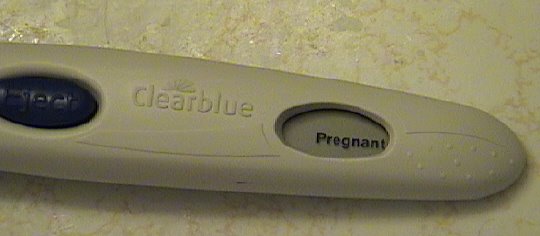
Tuesday, August 01, 2006
Monday, July 31, 2006

dissertation anxiety
The other issue that is bothering me--in addition to this--is that I have no confidence in my dissertation. I have an amazing topic that is very important to me and is pretty hot right now, and I know that this project has the potential to be great. But I do not have confidence in my ability to accomplish it. This is an unfamiliar feeling to me. Even setting out on a difficult and daunting project, I always know that in the end I will have done it and done it well. I can't say that about my diss. I know the questions that I need to ask, but I am really not certain that I am going to be able to answer them in any useful way. There are easier topics I could have chosen--topics that would make a good dissertation, even. But I can't turn my back on this one. At the same time, I don't know if I can do it. I have got to convince myself that is it possible very soon.
I've had a rough year
Nothing exceptionally terrible has happened--unless you count the miscarriage--but I have felt generally off for the past year. I have had several major external stressors, but I think a lot of it comes down to just not feeling right in my own skin. I was depressed last fall after RB weaned and I went to counseling for a while, which helped. My hormones changed because I stopped nursing and I also had to change birth control pills, which made things so much worse that I just stopped taking them altogether. I got pregnant (on purpose--not because I quit the pills) in March and then miscarried at the end of May, and that has been another hormonal upheaval. In the process I have gained 15 pounds. That's a lot of pounds in a short time. My body has been in so many different shapes since October 2003--I got pregnant, and then had a baby, lost all the baby weight, breastfed, stopped breastfeeding, got pregnant, got not-pregnant, and generally ate too much because I have generally felt like crap for a year. And I look like hell. Or at least like some other person that I don't recognize as myself. My weight has plateued--I'm not gaining anymore--but I have not been able to stick to a change in eating habits and activity that would allow me to get back to my normal weight. I just feel bad.
first day of school
RB started at her new school today. I've been making myself sick over it but it went quite smoothly. She hugged me and her Daddy and then took a teacher's hand and happily walked off with her. Last week we brought her for a visit so that she wouldn't be afraid of a place she'd never seen before. It seemed to have an added benefit--she had so much fun playing there that she was excited to go back today. I am relieved because she actually told me early last week that she did not want to go to a new school and did not want to make new friends--a surprising declaration from a two-year-old! That has changed now, as she has seen that her new school is a nice place to be. But I'm still thinking of it obsessively and will probably rush home to see her as soon as my class is over.
On a side note, I had an another interesting Google referral this weekend: "blog of a full time phd mother to a toddler." Guess what--You found me!
On a side note, I had an another interesting Google referral this weekend: "blog of a full time phd mother to a toddler." Guess what--You found me!
Thursday, July 27, 2006
big and little
For two weeks, RB has been categorizing everything that she sees by size. I think that she has suddenly grasped the concept of opposites and of "big" and "little" and she is obsessed with it! The best thing that can happen in her day is to run across similar objects of different sizes--she literally yells, "Look, Mommy! Big chair! Little chair!"
I love how excited she gets when she learns something. The first color she knew was purple and for weeks she would seek out purple things and bring them to me. She wasn't even interested in other colors, just piling up purple things. Now that she knows her colors, she is on to size. She was stuck on numbers for a while, counting everything she saw, but I don't think that she understands the real concept of counting. Her little obsessions are funny. Come to think of it, though, I'm sort of like that, too.
I love how excited she gets when she learns something. The first color she knew was purple and for weeks she would seek out purple things and bring them to me. She wasn't even interested in other colors, just piling up purple things. Now that she knows her colors, she is on to size. She was stuck on numbers for a while, counting everything she saw, but I don't think that she understands the real concept of counting. Her little obsessions are funny. Come to think of it, though, I'm sort of like that, too.
Tuesday, July 25, 2006
Google referrals
You know what Google search has been bringing people a lot lately? "not smart enough"
Wierd. I wonder what's going on with that. What are you looking for?
And another question: Who is from Snook?
Wierd. I wonder what's going on with that. What are you looking for?
And another question: Who is from Snook?
First "real" publication
Good news--a proposal I wrote has been accepted for an essay collection. I've had publications in a small in-house journal at my Masters institution, but this is will be my first "real" publication. It's not a journal, but, hey, it's something. And now I have to write the essay. It's not related to my dissertation but on an author of interest to me (not Flannery), and I have written an essay on this book before. So I'm not starting from nothing, but it will have to be a whole new essay. I felt really good about the proposal, though, and I'm excited. I am concerned about the distraction from my dissertation--I have already committed to a different project to complete my women's studies certificate and for which I recieved a small fellowship (yea!). That project is directly related to my diss, so that helps. There is a good chance that these extra projects will help keep me motivated toward my dissertation. I will have a sense of accomplisment as I complete projects, and I will also have to make an effort to make time for my diss work--I tend to be more efficient when I have more things to juggle.
There is one thing that worries me. My advisor and I have agreed (I think) that I should not try to rush into getting a diss proposal officially approved yet and to start writing as a way of coming to those ideas. Which is great for the way I work. But I want to apply for a fellowship this fall and I need a good proposal for that. So I really do want to push to get something out even though I would prefer to put it aside for a while. I am worried that I will not have the proposal I want to have by the time I need it. Then again, I could apply for the fellowship next year--but that implies that I will be working on my diss for three years. But let's face it. I will be. Might as well accept that now.
There is one thing that worries me. My advisor and I have agreed (I think) that I should not try to rush into getting a diss proposal officially approved yet and to start writing as a way of coming to those ideas. Which is great for the way I work. But I want to apply for a fellowship this fall and I need a good proposal for that. So I really do want to push to get something out even though I would prefer to put it aside for a while. I am worried that I will not have the proposal I want to have by the time I need it. Then again, I could apply for the fellowship next year--but that implies that I will be working on my diss for three years. But let's face it. I will be. Might as well accept that now.
Friday, July 21, 2006
The Crazy Bear It Away
I'm on a teaching high! Today we wrapped up O'Connor's novel The Violent Bear It Away, and I've been pondering the class discussion for the past hour. Most students were actively engaged with the religious dimension of the novel and we had a great discussion about free will and determinism and theology and prophets and Satan. Great stuff. And some students, as usual, are resisting the religious interpretations of the novel, offering alternative interpretations--mostly psychological. This is something that has been going on and that I have encouraged throughout the class, considering O'Connor's essays in which she makes claims about the meaning of her fiction and then questioning whether the meaning is inherent or whether it is conditioned by O'Connor herself. Is it there because she says it's there? Or could it be something else altogether? And what is the point of the novel if they're all just crazy?
Interestingly, O'Connor's letters predict specific "misinterpretations" of her works, and those are the precise interpretations that my students have offered. They are getting it wrong in just the right ways! I have drawn their attention to those letters and reaction has been mixed. But the ones who are seeking non-religious interpretations are sticking to their guns. While some students play "Find the action of Grace" others play "Find the meaning that does not include Jesus." Which is great--I am not resisting that, and such questions are quite relevant to the state of O'Connor scholarship.
So here's what I'm left to ponder: How are these students so confident in non-religious interpretation when the central action of the novel is a baptism and every other word is Jesus, God, Lord, Almighty, Holy Ghost, devil, prophet. It seems that it takes a concerted effort to ignore those words. And if Christian mystery is not central to the meaning, what does it all mean? This is just a particular brand of crazy?
The resistance to religious interpretation up until now--when all we had read were the short stories in A Good Man Is Hard to Find--has been unremarkable because frequently Biblical allusions can be easily overlooked and references to Christ can be attributed to Southern manners. But not in this novel. It is a big job to intentionally avoid religion when the protagonist is called as a prophet and Satan shows up as a character.
Interestingly, O'Connor's letters predict specific "misinterpretations" of her works, and those are the precise interpretations that my students have offered. They are getting it wrong in just the right ways! I have drawn their attention to those letters and reaction has been mixed. But the ones who are seeking non-religious interpretations are sticking to their guns. While some students play "Find the action of Grace" others play "Find the meaning that does not include Jesus." Which is great--I am not resisting that, and such questions are quite relevant to the state of O'Connor scholarship.
So here's what I'm left to ponder: How are these students so confident in non-religious interpretation when the central action of the novel is a baptism and every other word is Jesus, God, Lord, Almighty, Holy Ghost, devil, prophet. It seems that it takes a concerted effort to ignore those words. And if Christian mystery is not central to the meaning, what does it all mean? This is just a particular brand of crazy?
The resistance to religious interpretation up until now--when all we had read were the short stories in A Good Man Is Hard to Find--has been unremarkable because frequently Biblical allusions can be easily overlooked and references to Christ can be attributed to Southern manners. But not in this novel. It is a big job to intentionally avoid religion when the protagonist is called as a prophet and Satan shows up as a character.
Tuesday, July 18, 2006
on trying again
As I said in the previous post, the way I think about pregnancy is changed.
I was frustrated during the six-week holding period when I was advised not to attempt to concieve yet--like I was holding my breath for all that time. But that time was necessary for an emotional healing process. I mentioned that I was angry in the first few weeks and wanted to be pregnant again very badly. After a little time, I no longer feel like being pregnant again will make it all better--I no longer feel the need for the band-aid on the wound because I have healed since then. At this point, I do want to get pregnant, but I feel like it's okay if I do and it's okay if I don't. I actually have no interest in ovulation testing and charting and temping and all that stuff. When I got pregnant, I had a false sense of control because I had selected the due date for myself and, with the aid of an ovulation test kit, successfully got pregnant at the right time on the first try (again). Look how smug I am. But then it was over and all illusions of control vanished. (Very Flannery O'Connor, right?) So now I am ready to concieve again but not ready to set myself up for the emotional roller coaster of am I? or am I not? My husband also said to me that he doesn't want any testing or charting or planning. Just going about our lives and taking what we get. I think that those attitudes will change after a few months, at least mine will, but I like where we are now--not anxious to make something happen but open to it if it does.
But I have lost something important.
When I got pregnant, I was elated. When I was pregnant with RB, I was so afraid--I read obsessively, agonized over everything I felt and ate and heard. I would have invented things to worry about but What to Expect When You're Expecting took care of all of that for me (BTW, don't buy that book--really, don't buy it). And childbirth? How scary is that?! And what do you even do with a baby once it gets here--besides dress it up? But the second time, no fear. I was so confident! I had no desire to read a book or a baby magazine or pregnancy websites. I knew that I could handle childbirth--as long as there is an epidural in reach, I've got that covered! And I have been successful with RB, so I know I can get a baby from birth to two years, anyway. That's gone now. I know that if I get pregnant again, I will be anxious and afraid again. I'll over-worry and over-analyze. The immediate euphoria will be replaced with cautious optimism. Maybe that feeling will fade as the pregnancy advances. Who knows?
I was frustrated during the six-week holding period when I was advised not to attempt to concieve yet--like I was holding my breath for all that time. But that time was necessary for an emotional healing process. I mentioned that I was angry in the first few weeks and wanted to be pregnant again very badly. After a little time, I no longer feel like being pregnant again will make it all better--I no longer feel the need for the band-aid on the wound because I have healed since then. At this point, I do want to get pregnant, but I feel like it's okay if I do and it's okay if I don't. I actually have no interest in ovulation testing and charting and temping and all that stuff. When I got pregnant, I had a false sense of control because I had selected the due date for myself and, with the aid of an ovulation test kit, successfully got pregnant at the right time on the first try (again). Look how smug I am. But then it was over and all illusions of control vanished. (Very Flannery O'Connor, right?) So now I am ready to concieve again but not ready to set myself up for the emotional roller coaster of am I? or am I not? My husband also said to me that he doesn't want any testing or charting or planning. Just going about our lives and taking what we get. I think that those attitudes will change after a few months, at least mine will, but I like where we are now--not anxious to make something happen but open to it if it does.
But I have lost something important.
When I got pregnant, I was elated. When I was pregnant with RB, I was so afraid--I read obsessively, agonized over everything I felt and ate and heard. I would have invented things to worry about but What to Expect When You're Expecting took care of all of that for me (BTW, don't buy that book--really, don't buy it). And childbirth? How scary is that?! And what do you even do with a baby once it gets here--besides dress it up? But the second time, no fear. I was so confident! I had no desire to read a book or a baby magazine or pregnancy websites. I knew that I could handle childbirth--as long as there is an epidural in reach, I've got that covered! And I have been successful with RB, so I know I can get a baby from birth to two years, anyway. That's gone now. I know that if I get pregnant again, I will be anxious and afraid again. I'll over-worry and over-analyze. The immediate euphoria will be replaced with cautious optimism. Maybe that feeling will fade as the pregnancy advances. Who knows?
on miscarriage
Warning: Content is potentially disturbing.
It's been eight weeks since the miscarriage. This has been a really strange thing to deal with. In a lot of painful situations how to respond emotionally seems clear--there is an expected reaction and people respond to that expected reaction in expected ways. But I really didn't know what emotions should correspond with a miscarriage and people didn't seem to know how to respond to me, either. That sounds strange to say, but I felt it strongly.
I had a nagging feeling that something was not right--more than normal worry because I mentioned it to my doctor. I had my first appointment and had an ultrasound that showed the little creature and its little heartbeat alive inside me. And the very next day I held the fetus in my hand. I was at home alone when it happened, and I looked at it, telling myself out loud what it was--like I had to explain to myself what had just happened. That is an important detail to me because it is the image that appeared in my mind suddenly and frequently for weeks, and I had a physical reaction every time. Like I had run into something. Or like I was about to walk into that image and had to stop short to avoid it. I even turned my head trying not to look. When I came home from the doctor's office after I miscarried, I threw the ultrasound photo in the trash. I wanted to separate myself from it--I did not want to ever look at it again. Because then it would be like I lost a baby. I did everything possible to emphasize to myself that it was not a child but the idea of a child--the hope for a child--the potential of a child--that was lost.
But it is not an idea in that it will all go away if I can have another child. This was the hope for a specific baby, born at Christmas, when RB is two and a half. I had begun to think of myself as a mother of two, and now I am not that. When I fill out forms at the doctor's office, there will always be more pregnancies than children. I am not "dwelling" on the experience, whatever that means, anyway. But I am aware of it as a presence in my life that will be there always.
I don't have a lot of emotions about the miscarriage anymore. I feel a dim kind of sadness sometimes, but most of the time I feel not much at all. Just a kind of understanding that this thing happened. Right after it happened I felt depressed and sometimes very sad but the emotion that was surprisingly powerful was anger. I wanted very much to be pregnant and I was not anymore, and that pissed me off. I wanted to be pregnant again right away because it was very hard to be in the middle of all the plans I had made in my mind and then have to toss them out. It was just over. I was so angry about that.
And it was hard to talk to people--and everyone knew I was pregnant, so the topic came up. Most of the time I didn't want to talk about it and other times I didn't know who to confide in. When people heard the news, some responded as if it were a great tragedy, and it wasn't. That was uncomfortable for me. Others responded as if it were no big deal--"Well, you know, it's not that unusual."--also uncomfortable because despite the statistical frequency of miscarriage, it is a big deal to me. Of course, the response that was helpful (which I did get, too) was just quiet listening and "I'm sorry" and "I love you." Isn't that always the right response? Why do we forget that all the time?
But now I am good and not angry and not sad--at least not in the same way--but I am changed. And the way that I think about pregnancy is changed.
It's been eight weeks since the miscarriage. This has been a really strange thing to deal with. In a lot of painful situations how to respond emotionally seems clear--there is an expected reaction and people respond to that expected reaction in expected ways. But I really didn't know what emotions should correspond with a miscarriage and people didn't seem to know how to respond to me, either. That sounds strange to say, but I felt it strongly.
I had a nagging feeling that something was not right--more than normal worry because I mentioned it to my doctor. I had my first appointment and had an ultrasound that showed the little creature and its little heartbeat alive inside me. And the very next day I held the fetus in my hand. I was at home alone when it happened, and I looked at it, telling myself out loud what it was--like I had to explain to myself what had just happened. That is an important detail to me because it is the image that appeared in my mind suddenly and frequently for weeks, and I had a physical reaction every time. Like I had run into something. Or like I was about to walk into that image and had to stop short to avoid it. I even turned my head trying not to look. When I came home from the doctor's office after I miscarried, I threw the ultrasound photo in the trash. I wanted to separate myself from it--I did not want to ever look at it again. Because then it would be like I lost a baby. I did everything possible to emphasize to myself that it was not a child but the idea of a child--the hope for a child--the potential of a child--that was lost.
But it is not an idea in that it will all go away if I can have another child. This was the hope for a specific baby, born at Christmas, when RB is two and a half. I had begun to think of myself as a mother of two, and now I am not that. When I fill out forms at the doctor's office, there will always be more pregnancies than children. I am not "dwelling" on the experience, whatever that means, anyway. But I am aware of it as a presence in my life that will be there always.
I don't have a lot of emotions about the miscarriage anymore. I feel a dim kind of sadness sometimes, but most of the time I feel not much at all. Just a kind of understanding that this thing happened. Right after it happened I felt depressed and sometimes very sad but the emotion that was surprisingly powerful was anger. I wanted very much to be pregnant and I was not anymore, and that pissed me off. I wanted to be pregnant again right away because it was very hard to be in the middle of all the plans I had made in my mind and then have to toss them out. It was just over. I was so angry about that.
And it was hard to talk to people--and everyone knew I was pregnant, so the topic came up. Most of the time I didn't want to talk about it and other times I didn't know who to confide in. When people heard the news, some responded as if it were a great tragedy, and it wasn't. That was uncomfortable for me. Others responded as if it were no big deal--"Well, you know, it's not that unusual."--also uncomfortable because despite the statistical frequency of miscarriage, it is a big deal to me. Of course, the response that was helpful (which I did get, too) was just quiet listening and "I'm sorry" and "I love you." Isn't that always the right response? Why do we forget that all the time?
But now I am good and not angry and not sad--at least not in the same way--but I am changed. And the way that I think about pregnancy is changed.
Monday, July 17, 2006
finally taking a breath (but a short one)
Sheesh! What a month! So I've now moved about half an hour out of town and am getting settled in, but I still do not have internet access at home. I've gotten totally out of touch with the blogosphere, but I anticipate return to normalcy any minute now. Any. . . minute. . . now. . . I have lots to report. I want to rave about my red kitchen. And rave about my class. And I also want to reflect on my miscarriage--I have noticed a lot of Google searches for miscarriage leading people here, and I have said nothing substantial because it was painful. But now I am ready to talk. I think it might help someone--because not long ago I was one of the Google searchers trying to connect. But not today because my day has suddenly disappeared and I must now retrieve RB from preschool.
P.S. RB is now two years old. And she LOVES the toy kitchen--she made me some pizza. :)
P.S. RB is now two years old. And she LOVES the toy kitchen--she made me some pizza. :)
Thursday, July 06, 2006
getting back in the habit
It's been hard to get back in the habit of blogging, what with moving and teaching and financial agony and all.
So today I taught my second class--really the first REAL day of teaching because I never get past the syllabus on the first day. I'm not even one of those nice teachers who gives a brief overview and lets them go early. I just spend a really long time talking about the syllabus and assignments and how I want things to go. This class is very different from anything I've taught because it is a senior-level single author course that I have designed. I do have mixed feelings about teaching this class as a grad student. I am ecstatic about the opportunity and I know that I am fully qualified to teach it, having done extensive research on O'Connor. But I wonder how I would have felt as an undergrad taking such a class from a grad student. I am taking it as a huge responsibility, but then I always consider teaching a huge responsibility.
On the first day of class I asked what experience students had with Flannery O'Connor, and very few had read anything. I naively assumed that they registered for the class because they were really interested in taking it, but no, just needed some upper level credit. One student said that she had not read O'Connor but knew she was a Christian writer and so was very excited about reading her work. Yikes! O'Connor is not offering a kind of Christianity that one finds in--well, that one finds much of anywhere. If she's open, though, I think that this student can have a profound experience reading O'Connor.
So today I was nervous before class because I was prepared to deliver the longest lecture I have ever given--I tend not to lecture--but also because I was coming to them after they've had their first taste of Flannery. (No fewer than seven dead bodies for today.) They were shocked but most of them are still on board, and the discussion went well. This is a good location to discuss O'Connor because many of the students do know the Bible and are familiar with religious symbolism, even if they don't consider themselves born again (and about half the class was surprised that the phrase "Bible Belt" was coined as a pejorative term). A major theme of the class is the fact that O'Connor has been the most influential critic of her own work and the question of a writer's critical authority. I'm excited to see where things are going to go.
We're moving Saturday and are not nearly packed up. There is a promise of cable internet coming by the end of the summer and I think that the decision has been made to wait on it. These things tend to take longer than anticipated, but I'm still going to school every day to teach, so I'll have access. Come September there might be trouble.
We're taking it easy tomorrow; O'Connor body count is low.
So today I taught my second class--really the first REAL day of teaching because I never get past the syllabus on the first day. I'm not even one of those nice teachers who gives a brief overview and lets them go early. I just spend a really long time talking about the syllabus and assignments and how I want things to go. This class is very different from anything I've taught because it is a senior-level single author course that I have designed. I do have mixed feelings about teaching this class as a grad student. I am ecstatic about the opportunity and I know that I am fully qualified to teach it, having done extensive research on O'Connor. But I wonder how I would have felt as an undergrad taking such a class from a grad student. I am taking it as a huge responsibility, but then I always consider teaching a huge responsibility.
On the first day of class I asked what experience students had with Flannery O'Connor, and very few had read anything. I naively assumed that they registered for the class because they were really interested in taking it, but no, just needed some upper level credit. One student said that she had not read O'Connor but knew she was a Christian writer and so was very excited about reading her work. Yikes! O'Connor is not offering a kind of Christianity that one finds in--well, that one finds much of anywhere. If she's open, though, I think that this student can have a profound experience reading O'Connor.
So today I was nervous before class because I was prepared to deliver the longest lecture I have ever given--I tend not to lecture--but also because I was coming to them after they've had their first taste of Flannery. (No fewer than seven dead bodies for today.) They were shocked but most of them are still on board, and the discussion went well. This is a good location to discuss O'Connor because many of the students do know the Bible and are familiar with religious symbolism, even if they don't consider themselves born again (and about half the class was surprised that the phrase "Bible Belt" was coined as a pejorative term). A major theme of the class is the fact that O'Connor has been the most influential critic of her own work and the question of a writer's critical authority. I'm excited to see where things are going to go.
We're moving Saturday and are not nearly packed up. There is a promise of cable internet coming by the end of the summer and I think that the decision has been made to wait on it. These things tend to take longer than anticipated, but I'm still going to school every day to teach, so I'll have access. Come September there might be trouble.
We're taking it easy tomorrow; O'Connor body count is low.
Friday, June 30, 2006
Back to civilization and high speed internet
I'm back home now after a very nice visit with family and way too long in the car. But the blog will not get much attention for a few more days. I am preparing for my first day of class--teaching an upper level literature class for the first time--and I have to make sure everything is together today because of the holiday next week. During the four-day weekend, I'm going to have to try to pack up the house while RB tries to unpack it. We're moving a week from Saturday. I'm pleased with the new house so far. Hopefully I will remain happy once we get all of our stuff in there. My hubby M. is picking up the keys today and the electricity will be turned on Wednesday. But I was taking prelims right before going on vacation so guess how much is packed and ready to move. Neither M. nor I have time to deal with this right now, but such is life.
We are also feeling the money crunch that accompanies moving. We have to pay deposits and overlapping rent and renting a U-Haul. Who knows what is going to happen with the internet or how much we're going to pay (this has been my biggest worry in the decision to move to a small town). We need a new washing machine and a refrigerator. We also need a new entertainment center for the living room. I would really like to buy RB a bed--the ones I like are plentiful and cheap right now because of college students moving season, but we just don't have the money to buy it. But we are buying her a nice big birthday present. We don't typically do big, expensive gifts, but I want her to have a toy kitchen. I think she will love it and any future children we have will also love it. Oh, and I think that I should buy three-shelf bookcases to replace my five-shelf book cases. Because the bookcases will no longer be in a closed-off room, I am afraid that RB might climb on them and knock them over. The shorter ones seem less likely to fall and less likely to cause serious injury if they do. M. thinks he can anchor the tall bookcases to the wall, but they are really cheap and I just don't see how a screw in an inch-thick piece of particle board is going to help anything. I think that I can wait on the bookcases--I have already packed my books and have labeled them carefully so that I can dig through boxes and find them. So I can just have boxes of books until I get my regular salary again in the fall.
It seems like every summer the increase in expenses is inversely proportional to the decrease in income.
We are also feeling the money crunch that accompanies moving. We have to pay deposits and overlapping rent and renting a U-Haul. Who knows what is going to happen with the internet or how much we're going to pay (this has been my biggest worry in the decision to move to a small town). We need a new washing machine and a refrigerator. We also need a new entertainment center for the living room. I would really like to buy RB a bed--the ones I like are plentiful and cheap right now because of college students moving season, but we just don't have the money to buy it. But we are buying her a nice big birthday present. We don't typically do big, expensive gifts, but I want her to have a toy kitchen. I think she will love it and any future children we have will also love it. Oh, and I think that I should buy three-shelf bookcases to replace my five-shelf book cases. Because the bookcases will no longer be in a closed-off room, I am afraid that RB might climb on them and knock them over. The shorter ones seem less likely to fall and less likely to cause serious injury if they do. M. thinks he can anchor the tall bookcases to the wall, but they are really cheap and I just don't see how a screw in an inch-thick piece of particle board is going to help anything. I think that I can wait on the bookcases--I have already packed my books and have labeled them carefully so that I can dig through boxes and find them. So I can just have boxes of books until I get my regular salary again in the fall.
It seems like every summer the increase in expenses is inversely proportional to the decrease in income.
Friday, June 23, 2006
recommended reading
The fabulous Megs has started a new blog that is sure to be a great read. You should go see her.
Thursday, June 22, 2006
unplugging
I am venturing into the wilderness where they only have dial-up internet and cell phone service is never certain. It's truly archaic. It will be a nice visit with family and I shall return to civilization shortly. Unless I am eaten by a bear. And I won't be able to call for help because my phone won't work. But I can take a picture of the bear and whoever finds my shiny pink phone on the ground will know what happened.
P.S. Scrivener was totally right. Thanks!
P.S. Scrivener was totally right. Thanks!
wistful
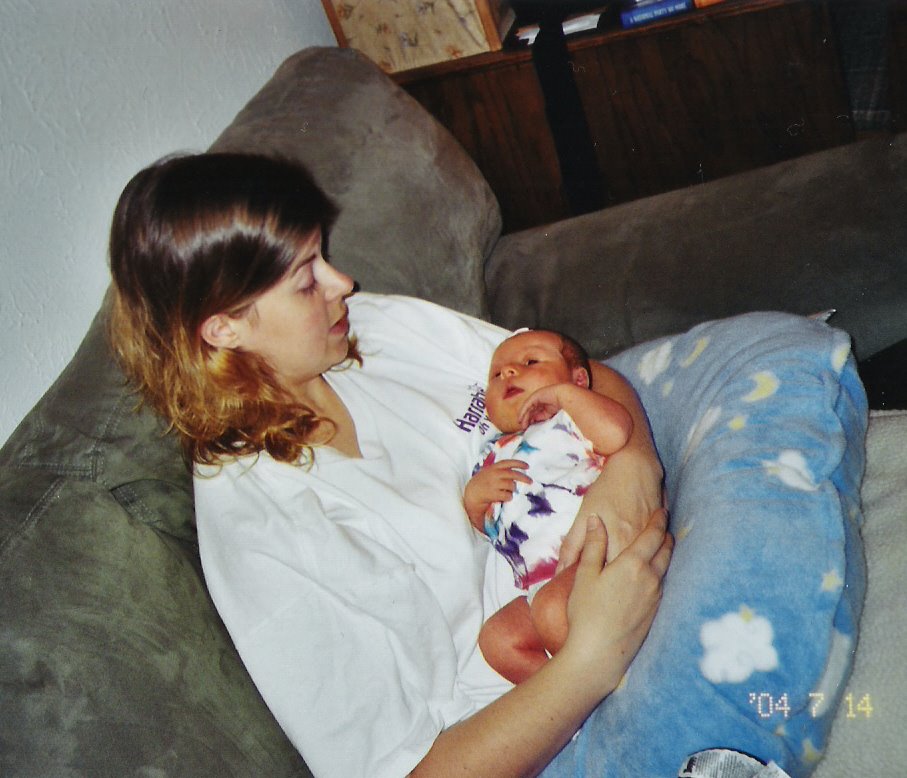
Anastasia's picture with baby Kizzy made me happy (no link--she took it down), so I'm posting my own. According to the date stamp, RB is two days old, just home from the hospital. And the Boppy pillow in my lap indicates a full and happy little tummy. Here's to past and future fertility, A.
Tuesday, June 20, 2006
Sunday, June 18, 2006
42
After writing my last post, I read the questions on my written exam again hoping for an epiphany. And all I got was the uncomfortable realization that I'm facing something very much like that presented in The Hitchhikers Guide to the Galaxy. The answer to The Ultimate Question of Life, the Universe, and Everything is 42. So what's the question?
As I sit here and ponder
the question of interdisciplinarity...
the question of representation...
the question of otherness...
I can't help but think that Douglas Adams was onto something.
P.S. Microsoft Word doesn't recognize interdisciplinarity as a word. Or otherness. Or liminal. I use those words a lot. Yes, I know I can add them to my dictionary, but I really enjoy bitching about it. Plus I regularly use, like, five different computers, so I will inevitably be annoyed by it at some point.
As I sit here and ponder
the question of interdisciplinarity...
the question of representation...
the question of otherness...
I can't help but think that Douglas Adams was onto something.
P.S. Microsoft Word doesn't recognize interdisciplinarity as a word. Or otherness. Or liminal. I use those words a lot. Yes, I know I can add them to my dictionary, but I really enjoy bitching about it. Plus I regularly use, like, five different computers, so I will inevitably be annoyed by it at some point.
not smart enough
As my oral exam approaches, I am feeling the "not-smart-enough" creep up on me--a fear that I am a fraud who has somehow faked my way to this point and I am about to be exposed. Most people see the oral exam as not a big deal--the written is harder and the oral is a breeze, especially since I got such a good response to my written exam. But there is something hanging over me that prevents me from feeling that confidence. I have a difficult issue of representation and metaphor that I know I did not adequately address in my written exam (or in my diss proposal, for that matter) and that I am certain will come up in the oral. And I just don't know what to say. In fact, the problem I am having right now is that I can't formulate the proper question. There is a question on my written exam that I did not answer (and committees are notorious for making students answer questions in the oral that they avoided in the written) but that doesn't really ask a question, either. It is phrased as, "Write an essay that addresses..." That's not a question. If I can just wrap my mind around the right question, I think I can get down to the issue. And that's what my dissertation needs, too. That same question that is eluding me.
So today I feel not-smart-enough.
So today I feel not-smart-enough.
Thursday, June 15, 2006
here's how prelims work
For those who are curious, here's how our prelim exams work. At the end of coursework (two years for most people) you declare three areas of specialization: a primary teaching field and two supporting fields. Mine are 20th. c. American lit, 20th c. Southern lit and culture, and "Religion, Literature, and Modern Culture" (I put that one in quotes because my advisor and I changed the title about twenty times before settling on that one). Then you make three lists, one for each field, which are approved by the committee. Spend about a year reading the list, then take the exam.
The written exam happens on one day--it's four hours long in a little room with only your list, a dictionary, and a computer. The exams vary tremendously; mine consisted of four one-hour essays. Officially, you turn in a diss proposal on the same day as the written exam, but my advisor wanted my proposal earlier. A week after the written comes the oral, which is two hours long. First hour is about the written exam and the reading list, second hour is a discussion of the diss proposal.
Boring post, but since I'm writing about my exams so much, and since Academom asked, I thought I'd offer a description.
P.S. Every time I title
a
post with all lower case let
ters, I like to imagine I am
e.
e.
cummings. It
brings me a small moment of
joy.
I have almost shared
that with you
many times.
Glad to
get it off
my
chest
now
.
The written exam happens on one day--it's four hours long in a little room with only your list, a dictionary, and a computer. The exams vary tremendously; mine consisted of four one-hour essays. Officially, you turn in a diss proposal on the same day as the written exam, but my advisor wanted my proposal earlier. A week after the written comes the oral, which is two hours long. First hour is about the written exam and the reading list, second hour is a discussion of the diss proposal.
Boring post, but since I'm writing about my exams so much, and since Academom asked, I thought I'd offer a description.
P.S. Every time I title
a
post with all lower case let
ters, I like to imagine I am
e.
e.
cummings. It
brings me a small moment of
joy.
I have almost shared
that with you
many times.
Glad to
get it off
my
chest
now
.
one more prelim tip
(this post is for you, M.)
A friend asked me about studying for prelims and sharing my methods for preparing, so I've been thinking about it after the written exam. One more thing that I think helped me was to outline critical conversations. Remembering secondary sources was much harder than remembering literary texts, so when I saw a significant exchange happening among my secondary sources I outlined that. For example, in my second list there were a lot of critical texts about how to define the South and the field of Southern literature, all working around the question of what constitutes Southern difference. I created a document that listed their names along with a couple of sentences about their views, focusing on the ways that they intersect with and respond to other critics. Really useful because I was able to easily remember and draw from my outline of the critical conversation and insert myself into it for an essay on the exam.
It's all about relationships. Remembering what one critic or theorist said or what happened in one literary text is much less important than making connections among them.
A friend asked me about studying for prelims and sharing my methods for preparing, so I've been thinking about it after the written exam. One more thing that I think helped me was to outline critical conversations. Remembering secondary sources was much harder than remembering literary texts, so when I saw a significant exchange happening among my secondary sources I outlined that. For example, in my second list there were a lot of critical texts about how to define the South and the field of Southern literature, all working around the question of what constitutes Southern difference. I created a document that listed their names along with a couple of sentences about their views, focusing on the ways that they intersect with and respond to other critics. Really useful because I was able to easily remember and draw from my outline of the critical conversation and insert myself into it for an essay on the exam.
It's all about relationships. Remembering what one critic or theorist said or what happened in one literary text is much less important than making connections among them.
Tuesday, June 13, 2006
preliminary report on prelims
I got the phone call from the Advisor and the report was great! He said that my exam was "quite good" and had some specific compliments for me. I will share two because they may be useful for others.
The big strategy that paid off was that I focused the questions into something workable. All of my questions were very large, broad, big picture questions, and I was required to use so many primary texts and so many secondary texts from such and so lists to answer them. And I only had an hour for each essay. So I took the big fat big picture question, took a few introductory sentences to narrow it down (and justify the narrowing) and then wrote essays about the narrower topics. I was nervous initially because I was afraid that I might appear to be side stepping the question, but this strategy actually worked well because I explained why the narrower topic was important to the big picture (briefly) and then could actually say something substantial rather than broad generalizations.
The other strategy was actually suggested by a colleague who was going in to defend his dissertation at the same time. He advised me to mention texts or theorists that were related to the topic but that weren't necessarily essential to the answer--works I wanted to talk about but didn't have time to elaborate on. A little name dropping. Then that would demonstrate my breadth of knowledge while at the same time providing topics to discuss in the oral exam. The Advisor noticed that I did that and commented that it was great because, in fact, it provided plenty of material for my committee for the oral exam. Material that I provided, so I am already comfortable talking about it. (The key here is to drop names you WANT to talk about!)
As far as the experience of the exam--utterly dissatisfying. But a lot of people have expressed the same feelings about their exams. I was frustrated because I did not have enough time to write about some really important issues and texts. I spent too much time on the first question and had to short-change the last one (which is a guarantee that I'll be talking about it at the oral). I was shocked by the limitations of the test situation--as far as the opportunity to develop good essays in such a short time--even though I knew what I was getting into. But apparently, it all worked out well.
And a week from today I have the oral exam. I need a new ticker.
The big strategy that paid off was that I focused the questions into something workable. All of my questions were very large, broad, big picture questions, and I was required to use so many primary texts and so many secondary texts from such and so lists to answer them. And I only had an hour for each essay. So I took the big fat big picture question, took a few introductory sentences to narrow it down (and justify the narrowing) and then wrote essays about the narrower topics. I was nervous initially because I was afraid that I might appear to be side stepping the question, but this strategy actually worked well because I explained why the narrower topic was important to the big picture (briefly) and then could actually say something substantial rather than broad generalizations.
The other strategy was actually suggested by a colleague who was going in to defend his dissertation at the same time. He advised me to mention texts or theorists that were related to the topic but that weren't necessarily essential to the answer--works I wanted to talk about but didn't have time to elaborate on. A little name dropping. Then that would demonstrate my breadth of knowledge while at the same time providing topics to discuss in the oral exam. The Advisor noticed that I did that and commented that it was great because, in fact, it provided plenty of material for my committee for the oral exam. Material that I provided, so I am already comfortable talking about it. (The key here is to drop names you WANT to talk about!)
As far as the experience of the exam--utterly dissatisfying. But a lot of people have expressed the same feelings about their exams. I was frustrated because I did not have enough time to write about some really important issues and texts. I spent too much time on the first question and had to short-change the last one (which is a guarantee that I'll be talking about it at the oral). I was shocked by the limitations of the test situation--as far as the opportunity to develop good essays in such a short time--even though I knew what I was getting into. But apparently, it all worked out well.
And a week from today I have the oral exam. I need a new ticker.
Monday, June 12, 2006
My child is gifted
Okay, I hesitate to say this, but my child is gifted. I know, I know, every parent thinks her child is a genius. But I'm serious. She is very bright. She is advanced beyond her peers. There. I said it. As her parent, I am concerned about this and want to talk about it, but I find it difficult. So I am going to start posting my thoughts about my gifted child and stop shying away from it, at least on the blog. I will probably not talk about it much IRL (and I'd like to add that I don't necessarily like the phrase "in real life" (IRL) here because this is real life--I'm really writing this, people are really reading it, there is real communication going on. So here I'm using it as a convention that everyone is familiar with in the context of online communication--meaning conversations in person with people I know personally. But I do consider this real life.)
The first post on this topic, then, will be about how I don't feel comfortable talking about my concerns about my gifted child. I feel even now as if I should run down a list of the reasons that I think that she is gifted, to justify my claim. I won't because I'm trying to force myself out of that mindset. Plus, that is boring for everyone else.
This morning her preschool teacher asked me if I work with her at home on numbers, colors, etc. Yes, I do. She said to keep doing it because RB is very smart. I appreciated that comment because it was not a conversation that I had to initiate, and I had a person with a lot of experience with her age group to discuss it with. But the conversation did not last long because there were other parents in the room and I feel uncomfortable talking about this matter in front of them. I have also stopped telling stories about RB's funny comments and observations to other parents because lately the reaction has been a look of sadness from them and their confession that their kids are not talking so much or doing those things. They are embarrassed and so am I. It becomes about comparisons rather than sharing the experience of parenting.
I need to be able to talk about her without appearing to be boasting--I'm not--and without making others feel inferior--they're not. When I bring it up to my mother, her responses are invariably to say "She's got good genes" or to compare her to my nephew who is close to her age. Not helpful. I am not fishing for compliments or looking for comparisons. I want to know how to nurture my daughter. I want to talk about my concerns for her starting public school (in three years, but I've always been an early worrier). I want to talk to her teachers at the new school she starts in August about how to challenge her in the classroom. I want to talk about what concepts I should be working with her on and what is too advanced to introduce. I want to have these converstations and I don't feel comfortable doing it.
Why do I feel so uncomfortable talking about this with friends, family, and other parents? Why is the response when I do bring it up always, "Well, of course she's smart." That feels like dismissal. I am frustrated right now with my discomfort talking about the topic and also with the lack of dialogue when I do bring it up.
P.S. Check out the ticker.
The first post on this topic, then, will be about how I don't feel comfortable talking about my concerns about my gifted child. I feel even now as if I should run down a list of the reasons that I think that she is gifted, to justify my claim. I won't because I'm trying to force myself out of that mindset. Plus, that is boring for everyone else.
This morning her preschool teacher asked me if I work with her at home on numbers, colors, etc. Yes, I do. She said to keep doing it because RB is very smart. I appreciated that comment because it was not a conversation that I had to initiate, and I had a person with a lot of experience with her age group to discuss it with. But the conversation did not last long because there were other parents in the room and I feel uncomfortable talking about this matter in front of them. I have also stopped telling stories about RB's funny comments and observations to other parents because lately the reaction has been a look of sadness from them and their confession that their kids are not talking so much or doing those things. They are embarrassed and so am I. It becomes about comparisons rather than sharing the experience of parenting.
I need to be able to talk about her without appearing to be boasting--I'm not--and without making others feel inferior--they're not. When I bring it up to my mother, her responses are invariably to say "She's got good genes" or to compare her to my nephew who is close to her age. Not helpful. I am not fishing for compliments or looking for comparisons. I want to know how to nurture my daughter. I want to talk about my concerns for her starting public school (in three years, but I've always been an early worrier). I want to talk to her teachers at the new school she starts in August about how to challenge her in the classroom. I want to talk about what concepts I should be working with her on and what is too advanced to introduce. I want to have these converstations and I don't feel comfortable doing it.
Why do I feel so uncomfortable talking about this with friends, family, and other parents? Why is the response when I do bring it up always, "Well, of course she's smart." That feels like dismissal. I am frustrated right now with my discomfort talking about the topic and also with the lack of dialogue when I do bring it up.
P.S. Check out the ticker.
Friday, June 09, 2006
I just don't know what to do with myself
(except to blog, of course)
Written exam is Tuesday. In toddler world, weekends don't count as work days, so really, I've got two days. What do I do with those days? No idea.
Written exam is Tuesday. In toddler world, weekends don't count as work days, so really, I've got two days. What do I do with those days? No idea.
Wednesday, June 07, 2006
Counting down to prelims
Today I had the pre-exam meeting with the Advisor, and it was not what I had anticipated. He had not recieved questions from the other committee members yet, so he did not know for certain what would be on the exam. So he could not vaguely allude to questions, which, as I understood was the purpose of the meeting. But I did learn some things:
I was trying to talk to my mother yesterday about the exam and she asked, "So did you actually read the books on your list?" Um...yes. What a wierd question. My family has no idea what I do. But they try.
- There will likely be no identification questions on the exam. I have spent the last two days reviewing my books and listing potential ID questions, but those efforts have not been wasted because now I can probably recall some details that will in fact be useful in answering essay questions.
- The test will likely consist of four one-hour essays, some of which will be required questions and some of which will offer choices.
- A common mistake that people make is not giving specific examples in their essays. The work I have done preparing for IDs should help me to avoid that.
- I should not neglect the earlier twentieth century even though (because) my dissertation is on contemporary works.
- I should be prepared for questions that diverge from my diss topic. Wow. That really narrows it down.
- Questions should not be such that require me to address any specific work, but they will require me to address a specific number of works from the three lists.
I was trying to talk to my mother yesterday about the exam and she asked, "So did you actually read the books on your list?" Um...yes. What a wierd question. My family has no idea what I do. But they try.
Tuesday, June 06, 2006
This is RB

My brain is full. I have no mental energy for serious blog posts, probably until after prelims. But we have also discovered that I can't not blog. So here's RB. And those are my fingers putting sunblock on her arm. Ooohh...the mystery of the semi-anonymous academic blogger.
Monday, June 05, 2006
study break
Taking a break--made a ticker:

I chose the turtle because I have it tatooed on my back. Not just something that resembles it--that actual image. Wierd, huh?
I chose the turtle because I have it tatooed on my back. Not just something that resembles it--that actual image. Wierd, huh?
Sunday, June 04, 2006
Grad students blogging
I'm a little late in finding this, but here's a link to a story from US News and World Report on grad student bloggers.
Friday, June 02, 2006
why revision is hard
A Google search for "why revision is hard" led a browser here a few weeks ago--I really wonder what they were hoping to find! I was thinking about this today because I'm really tired after my intensive two days of revision on a document that is only twelve pages long. Part of what is hard is the fact that I worked for two days and it is still twelve pages long.
When we are learning to compose papers, there is a lot of emphasis, from students and teachers, on filling up pages. Papers are defined by how long they are, and progress is measured by how many pages you've written. So to work so hard on something but have no more PAGES to show for it is hard to take--it doesn't feel like progress in the way we have learned to see it. Even at a high academic level, even as an experienced writer and a teacher of writing, something remains of that idea of pages = progress. (And I have to tack on that this is relevant to understanding the difference between composing traditional papers and electronic or other media documents and how it is hard for a lot of people to move from one to the other.)
Another difficulty is that revision necessitates cutting, sometimes large amounts of text, sometimes words that you are especially attached to. My friend (I know you're reading this!) reminded me of some advice we got recently and that she has put to use. Have a "dump file" to go along with every document you produce, copy and paste everything you cut, and then date it and save it. Then your words are not deleted and you don't have the anxiety of losing something that might be valuable later or throwing away something that you have created. And maybe that would help allay the sense of moving backwards.
And revision is also hard because it requires a lot of thought work, and people (inside and outside the academy) too often fail to recognize that as real work.
When we are learning to compose papers, there is a lot of emphasis, from students and teachers, on filling up pages. Papers are defined by how long they are, and progress is measured by how many pages you've written. So to work so hard on something but have no more PAGES to show for it is hard to take--it doesn't feel like progress in the way we have learned to see it. Even at a high academic level, even as an experienced writer and a teacher of writing, something remains of that idea of pages = progress. (And I have to tack on that this is relevant to understanding the difference between composing traditional papers and electronic or other media documents and how it is hard for a lot of people to move from one to the other.)
Another difficulty is that revision necessitates cutting, sometimes large amounts of text, sometimes words that you are especially attached to. My friend (I know you're reading this!) reminded me of some advice we got recently and that she has put to use. Have a "dump file" to go along with every document you produce, copy and paste everything you cut, and then date it and save it. Then your words are not deleted and you don't have the anxiety of losing something that might be valuable later or throwing away something that you have created. And maybe that would help allay the sense of moving backwards.
And revision is also hard because it requires a lot of thought work, and people (inside and outside the academy) too often fail to recognize that as real work.
Thursday, June 01, 2006
a post about marriage
Last night I said something that surprised my husband, and then he responded in a way that surprised me. What was said is not as important here as that we were surprised.
You know how in the first year of a relationship you talk all the time and tell all kinds of interesting stories and every day learn more about each other? Then after a while, you have a sense that you know that person well, that you have unique insight into his psyche. That is very comfortable and secure and good, but it can also lead to taking a lot for granted, expecting your partner to be the same person he was five years ago, even if you realize that you are not. And assuming that you understand everything about him, that you have seen all that he is and know all that he will be.
Last night, after each of us said something that surprised the other, my husband and I stayed up late talking for hours, revealing things about ourselves that we had never talked about before. We learned a lot about each other again. And today I feel a little bit like I am falling in love. With my husband. How great is that?
You know how in the first year of a relationship you talk all the time and tell all kinds of interesting stories and every day learn more about each other? Then after a while, you have a sense that you know that person well, that you have unique insight into his psyche. That is very comfortable and secure and good, but it can also lead to taking a lot for granted, expecting your partner to be the same person he was five years ago, even if you realize that you are not. And assuming that you understand everything about him, that you have seen all that he is and know all that he will be.
Last night, after each of us said something that surprised the other, my husband and I stayed up late talking for hours, revealing things about ourselves that we had never talked about before. We learned a lot about each other again. And today I feel a little bit like I am falling in love. With my husband. How great is that?
sent off
I sent the diss proposal off to the committee, and now it is out of my hands. And now I must convince myself to let it go so I can continue with preparations for the written exam. And now I am exhausted and hungry and cannot quite work up the energy to find something to eat. From where I sit, that sounds like a rather large task.
Subscribe to:
Posts (Atom)

